
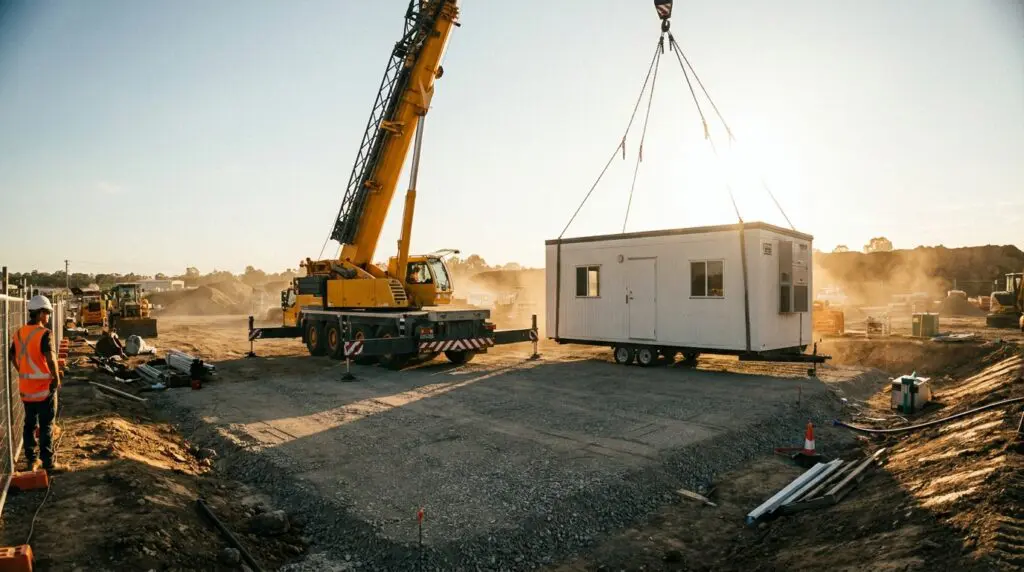
New Jobsite Office Trailers — Compare Up To 5 Supplier Quotes For Spec-Built Inventory
A new jobsite-grade trailer earns its premium when you need warranty coverage, spec control, and predictable maintenance across a long single-site project — or when the tax treatment on new equipment changes the math. We send your spec to up to 5 reputable suppliers in your market for competing quotes on factory-fresh inventory.
When New Beats Used For Jobsites
The Four Conditions That Make A New Jobsite Trailer The Right Buy
A used jobsite trailer almost always wins the simple math — you skip the steepest part of the depreciation curve and let the prior owner absorb year-one loss. So a buyer reaching for new inventory is paying a real premium and should be doing it for a specific reason. There are four reasons that hold up.
Long single-site duty. The used buy case rests on re-deployment across multiple projects. If the trailer is going to sit on one site for 3 to 5 years and then come off, you’re not amortizing across follow-on jobs and the resale at the end is similar regardless of starting condition. The depreciation premium on new shrinks relative to the long single-project amortization.
Spec control. Factory orders let you specify the exact floorplan, restroom configuration, ADA compliance, electrical service, generator hookup, HVAC tonnage, window placement, and finish package. Used inventory comes as-built — you take what’s on the lot or wait months for the right unit to show up. For union jobs, government work, owner-rep facing offices, or any site where the trailer is part of how you present, spec control is the value.
Warranty coverage. Year-one through year-three unknowns on a used unit are real money — HVAC compressor failure, roof leak, electrical panel work, plumbing rebuild. New trailers carry manufacturer warranty on the major systems for that window. On a long project where downtime is expensive and the budget is fixed, a warranty period that covers the highest-risk failures has measurable insurance value.
Tax treatment. New equipment purchases qualify for Section 179 expensing and bonus depreciation that used purchases often don’t, depending on the year and the structure of the buyer’s tax position. The right question for your CPA: how much of the new-trailer premium does the year-one deduction offset against your taxable income? For many construction LLCs and S-corps in a profitable year, the answer is meaningful.
If two or more of those four conditions hold, new is the buy. If none of them hold — multi-project re-deployment, standard configuration, comfortable with the inspection risk, no urgent tax position — used jobsite is almost always the better math. See the used jobsite trailer page for that side of the decision.
The fastest way to start: have up to 5 reputable suppliers in your market quote on the same spec. New inventory pricing varies more by manufacturer, configuration, and freight than by supplier markup — competing quotes surface that variance.
Spec Sheet For A Factory Order
What To Specify When You Order A New Jobsite Trailer
A used purchase is an inspection exercise — you verify what’s already built. A new purchase is a spec exercise — you write down what you need and the manufacturer builds to it. The six items below are the ones that contractors most often leave underspecified and then regret three months in. Reputable suppliers will quote against your spec sheet line by line and flag anything that adds cost or extends lead time.
Generator Hookup & Electrical Service Rating
Jobsite power is usually generator-fed and rougher than grid power. Specify the service amperage you actually need, the transfer-switch type if you’re running grid-plus-generator, and surge protection on the panel. Underspeccing the panel costs nothing at order; upgrading it after delivery is expensive.
HVAC Tonnage For Climate And Insulation Package
The default HVAC sizing assumes office-park use. Jobsite trailers run hotter inside — doors open more often, dust loads filters faster, and the unit may sit in direct sun without surrounding buildings to shade it. Spec one tonnage step above default for hot-climate jobsites and add the higher-rated insulation package.
Restroom Configuration And Water Source
Restroom-equipped units cost meaningfully more and lock in your water source assumption — municipal, well, hauled, or holding tank. Decide before order whether the site will have water hookup. If hauled water is the plan, spec a larger holding tank and a macerator pump rated for it. Adding restroom after the fact is a major retrofit.
ADA Compliance For Union Or Government Sites
Most union jobs and all federal projects require ADA-spec restroom plus ramped entry. Building it in at the factory is cheap; retrofitting an ADA-compliant restroom into a non-ADA unit is not. If there’s any chance the project will go union or pull federal funding, spec the ADA package up front.
Window Placement And Security Bars
Default window placement assumes a fixed office layout. On a jobsite trailer that may need a plan-room wall on the long side, you want window placement on the short walls to keep the long wall solid. Security bars at order are routine; adding them after delivery means drilling into the skin and creating warranty gaps.
Floor Reinforcement And Furniture Anchor Points
Standard floor specs handle desks and chairs. If you’re putting in a heavy plotter, a safe, a fireproof file cabinet, or planning to anchor a workbench, ask for the reinforced floor package. Manufacturer floor reinforcement is engineered; field-added blocking is improvised and voids the warranty on the floor system.
Common Factory Configurations
What’s On The New Jobsite Order Menu
Buy New Vs Rent Vs Buy Used
Decision Matrix For Jobsite Trailer Procurement
The decision sits on project duration, spec sensitivity, and tax position. Rental wins short projects almost every time. Used wins multi-project re-deployment. New wins when project duration is long, spec needs are custom, warranty period covers the highest-risk failure window, or the tax position rewards new equipment purchase. The table below is the rough decision matrix — your CPA will refine the tax row.
| Scenario | Recommended Path | Why |
|---|---|---|
| 1 project, under 18 months, standard spec | Rent | Rental beats purchase math at this duration regardless of new or used. See jobsite rental options. |
| 1 project, 18–36 months, standard spec | Compare buy used vs rent | Re-deployment isn’t in play, so the new premium is hard to justify. Used purchase at the right price often beats rent on this duration. See used jobsite options. |
| 1 project, 3–5 years, custom spec or ADA | Buy new | Spec control plus warranty value carries the premium across a long single-site amortization. Resale at end recovers a portion of the new-unit cost. |
| Multi-project re-deployment, 4+ jobs | Buy used | Best math case for used. The unit amortizes across the full re-deployment cycle. |
| Profitable tax year, Section 179 room available | Buy new, talk to CPA | Year-one deduction can offset a meaningful share of the new-trailer premium against current-year taxable income. Run the numbers before assuming. |
See the new construction trailer pillar → · Compare against the broader office-trailer buy →
Common Questions
FAQ
What’s the lead time on a new jobsite trailer order?
Standard 8×20 and 10×40 configurations from most manufacturers run 4 to 8 weeks from order acceptance to delivery. Restroom-equipped, ADA-compliant, or custom-spec units add 2 to 4 weeks for plumbing, framing, and inspection. 12-foot-wide and double-wide units add another 1 to 2 weeks for wide-load permits and pilot vehicles. Order well ahead of your project start date and have the supplier confirm the delivery window in writing.
What warranty coverage comes with a new jobsite trailer?
Manufacturer warranties typically cover the structure for 1 to 3 years, HVAC and major appliances for 1 year (sometimes extended through the manufacturer’s separate program), and roof seam integrity for 5 years on better units. Warranty terms vary by manufacturer and dealer — ask for the full warranty document in writing as part of the quote, not after the sale.
Can I claim Section 179 or bonus depreciation on a new trailer?
Often yes — new mobile office trailers generally qualify as Section 179 property for businesses with active income, and bonus depreciation rules let you write down a percentage of the cost in year one (the percentage has changed several times in recent years). Your CPA needs the exact purchase structure, your business’s tax position, and the current-year rules to give a real number. Ask before you order so the deduction is part of the procurement math, not a happy surprise after.
How does new compare to used on per-month cost across a 5-year project?
On standard configurations, new typically runs 30 to 60 percent more in up-front cost than a comparable used unit in good condition. Across a 5-year single-site project, the warranty coverage on year 1 to 3 plus the resale recovery at year 5 narrows the gap to 15 to 30 percent more total cost. If the tax treatment offsets a portion of the premium and the spec control matters for the project, the gap closes further. On standard configurations where used inventory covers your spec, used still usually wins.
What spec changes are routine at the factory, and what costs extra?
Routine at no extra cost: window placement, door swing direction, paint color from the standard palette, interior wall finish from the standard catalog. Common upcharges: restroom configuration, ADA package, generator hookup, upgraded HVAC tonnage, reinforced floor, custom paint, security bars, exterior signage prep. Ask for line-item pricing on the spec sheet so you can decide which upgrades are worth the cost.
How is delivery handled and what does it cost?
Freight is usually a separate line item on the quote, priced by distance and trailer size. 8 to 10 foot wide units move on standard permits in most states. 12-foot-wide units need wide-load permits and sometimes pilot vehicles, which the supplier coordinates. Site setup — leveling, blocking, step installation, utility hookups — is sometimes included and sometimes separate. Confirm what’s included in the delivery price before you sign.
How does this service work?
You submit one form with project type, size or size range, spec requirements (restroom, ADA, electrical service, HVAC tonnage), delivery ZIP, project start date, and contact email. We send the request to up to 5 reputable new-trailer suppliers in your market. They submit competing quotes against your spec, typically within an hour during business days. Free, no obligation. We’re paid by suppliers when they win your business — you pay nothing.
Stop Calling Suppliers One At A Time
One form. Up to 5 reputable suppliers compete for your new jobsite trailer order. Quotes back in about an hour during business days. Free, no obligation. No pushy sales calls.
Pingback: Newburg trailers site job - Trailerswi