

12×44 Construction Office Trailers — Specs, Use Cases & Quotes
Compare up to 5 quotes for 12×44 office trailers from reputable suppliers. About one hour to get bids back. Free, no obligation.
Spec Snapshot
12×44 Office Trailer — The Quick Spec
The 12×44 is an extra-wide single-wide, and the 12-foot width is the whole story. That extra two feet over a 10-wide is what buys you side-by-side layouts, a real conference table with room to walk around it, and multi-desk offices that don’t feel cramped. The tradeoff: a 12-foot body is an oversize transport load, so it ships under DOT permits and sometimes with an escort, and the inventory pool is thinner than the standard 8- and 10-wide sizes. Below are the dimensions, occupancy, and use-case envelope at a glance.
| Footprint (feet) | 12 × 44 |
| Footprint (meters) | 3.66 × 13.41 |
| Approx. interior | ~528 sq ft |
| Typical occupancy | 6-10 people |
| Typical use case | Wide-body project HQ, conference room plus side-by-side offices, restroom standard, ADA-compliant variants easy at this width, the layout flexibility a 10-wide can’t match |
Use Cases
What A 12×44 Office Trailer Fits
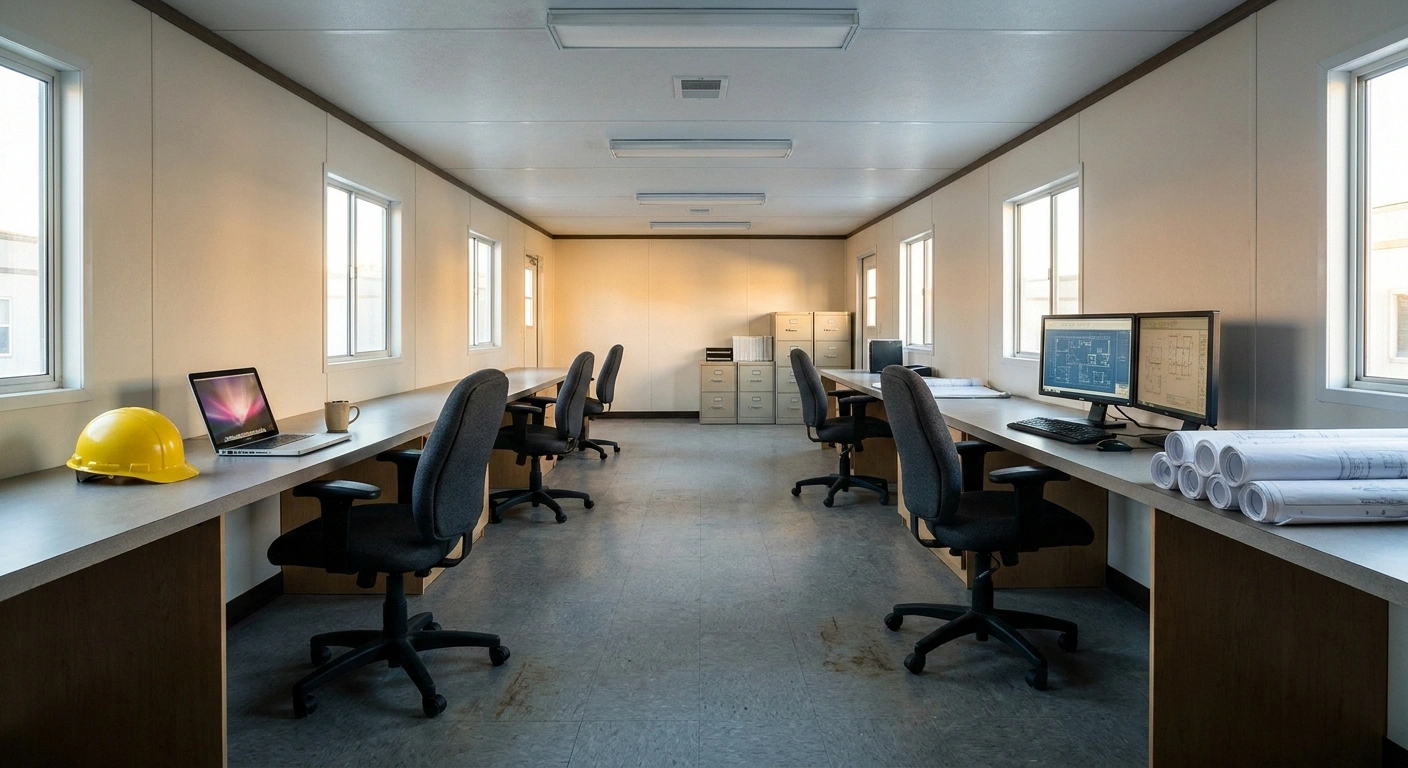
The 12×44 footprint runs ~528 sq ft of interior space, and the 12-foot width is what makes that space usable rather than just long. At this width you can run desks down both long walls and still leave a real circulation aisle down the middle — the thing a 10-foot-wide unit forces you to give up. It’s a wide-body project headquarters: a project manager, a superintendent, a scheduler, and an assistant PM all working in the same trailer, with room left for a conference table where a sub or owner’s rep can sit down and review drawings.
Where it lands well: mid-size to large commercial builds that run a full management team on site, civil and heavy-highway jobs that need a shared HQ for several supervisors, energy and utility projects where the field office doubles as a coordination and safety-briefing room, and any project where interior comfort and layout flexibility actually matter to how the team works. The extra two feet of width is the reason to choose a 12×44 over a longer-but-narrower unit — you’re buying side-by-side capability, not just square footage. It steps up cleanly from a 10-wide when a conference room and private offices need to coexist in one trailer.
Where it gets tight: very large job teams that need a true double-wide bullpen, or sites where the trailer has to share a single conference space across two or three concurrent crews. If you’re running a campus-scale program with dozens of staff, look at a double-wide or a modular complex. And if your access road is narrow or your delivery window is short, factor in the oversize-transport reality early — a 12-wide is a permitted load. For most wide-body HQ needs on a single project, though, the 12×44 is the size that fits a real management team without going to a double-wide. If you want a touch more length, the 12×50 and 12×60 extend the same wide-body envelope.
Configurations
Common Configurations For The 12×44
Side-by-side divided offices are the configuration that defines the 12-wide. At 12 feet across, you can split the trailer into two private offices sitting next to each other with a shared corridor, or run a row of offices down one side with an open work area down the other. A 10-foot-wide unit makes you choose between a private office and a usable aisle; the 12×44 gives you both. This is the layout flexibility that justifies the premium width, and it’s why project teams that need privacy plus collaboration reach for a 12-wide.
A wide conference room is the other signature 12×44 build. The extra width fits a full-size conference table with chairs on both sides and still leaves room to pull a chair out and walk behind it — a genuine sit-down meeting space, not a table jammed against a wall. Pair that conference room with two or three offices at the other end and you have a complete project HQ in one trailer. Open-plan 12×44 builds exist too, running one large bullpen for a coordinated crew, and they’re the deepest inventory pool at this size since they take the least interior partitioning.
Restroom-equipped 12×44 variants are standard, not an exception. At 12 feet of width there’s room for a real restroom without sacrificing the office floor the way a narrower unit would, so most suppliers stock or build restroom configs as a matter of course. ADA-compliant 12×44 variants are also easy at this width — the 12-foot interior comfortably accommodates the accessible restroom stall, the 32-inch door, and the interior turning clearance that ADA requires, which is exactly why ADA-compliant office trailers typically start at the wider sizes. If your jobsite needs an accessible office, the 12-wide is where it stops being a hunt and becomes a stock option. For purchase shoppers, see used construction trailer purchase options — wide-body used units turn up less often than standard sizes, so start the search early.

Rent Or Buy
Rent Or Buy A 12×44 — Which Makes Sense
Project duration is the first cut on this decision, and the wide-body premium shifts the math a little. Under six months on a one-off project, rent wins almost every time — you pay for the trailer only while you need it, and the supplier handles the permitted delivery, setup, and pickup that a 12-wide requires. Between six and 18 months it gets closer to a toss-up, though the thinner used 12-wide inventory and the oversize-transport cost on both ends are worth weighing before you commit to a buy. Past 18 months, or with recurring use across multiple large projects, buying a wide-body unit starts to make sense.
Single-site versus multi-site matters more for a 12-wide than for the small sizes, precisely because moving one is an oversize load. A contractor running one large project at a time can buy a 12×44 and relocate it between sequential jobs, but each move is a permitted haul, so the per-move cost is real. A contractor running several concurrent large sites usually rents per site rather than shuttling a single wide-body unit around under permits. Factor the transport reality into the buy-vs-rent call — it’s a bigger line item here than on a towable 8-wide.
Tax treatment is worth a brief flag: in the U.S., a purchased office trailer used in your trade or business may qualify for Section 179 expensing or bonus depreciation under current rules. Whether either applies depends on the tax year, your jurisdiction, your overall capital-expenditure picture, and your specific situation. Warranty also splits the decision — a new purchase carries a manufacturer warranty, a used unit usually doesn’t, and a rental puts maintenance on the supplier. Don’t make a buy-vs-rent call on tax math alone; talk to your tax advisor. Also see office trailer rental options if you want the rental path costed alongside, or office trailers for sale for the purchase side.
Quote Anatomy
What Suppliers Compare On A 12×44 Quote
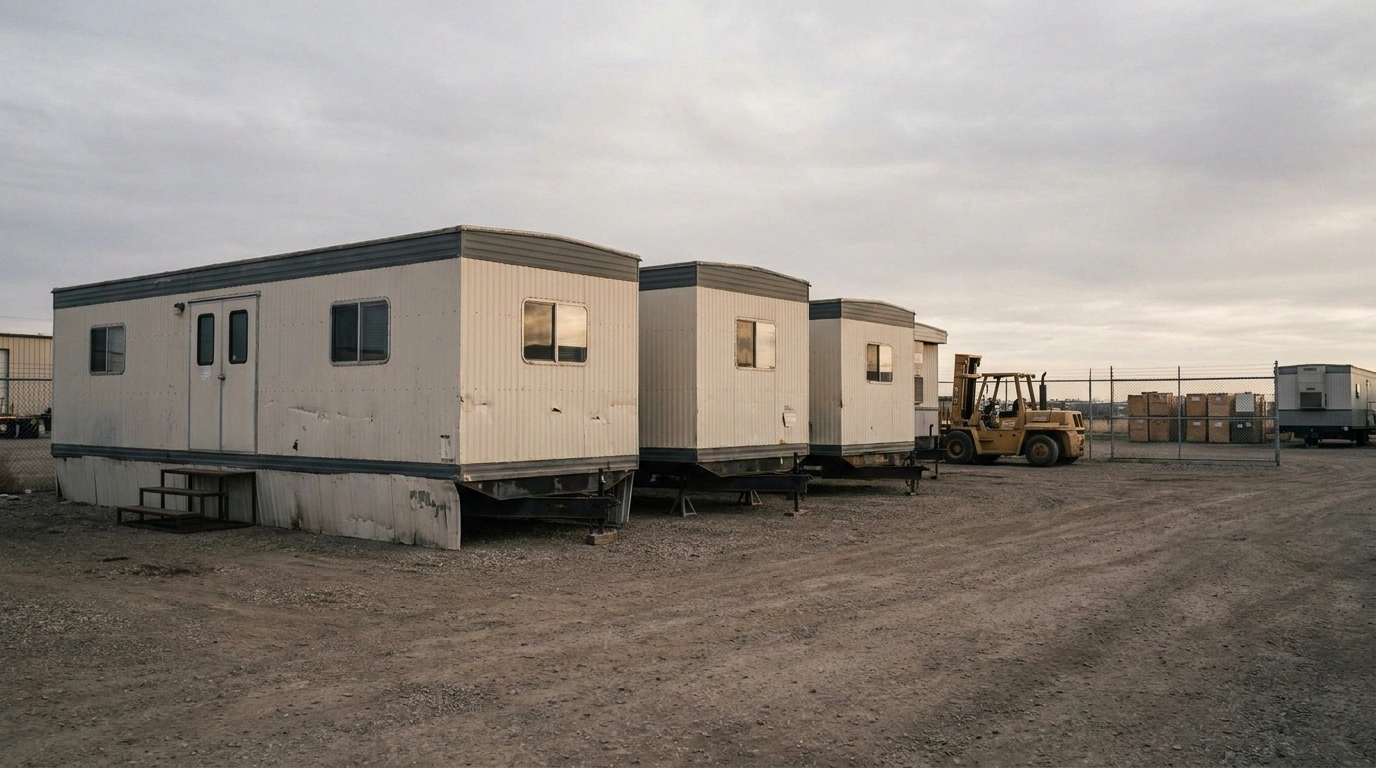
A 12×44 quote carries one line item the smaller sizes don’t — oversize transport. Because a 12-foot-wide body exceeds standard road width, delivery runs under DOT permits and sometimes requires an escort vehicle, and that shows up as a real cost on both the delivery and pickup ends. The line items below are what you’ll see across suppliers, and what to compare apples-to-apples when you have multiple bids in hand on the same 12×44 spec.
| Line Item | What It Is | What To Watch |
|---|---|---|
| Base monthly rate | The trailer rental itself. New units rent for more than used; the spread between suppliers comes from the age and condition of the specific wide-body unit they have available, and whether it’s an open plan, a divided-office, or a conference config. | The lowest base rate is sometimes the highest total cost once oversize delivery and setup are added. Wide-body inventory is thinner, so the supplier with the closest stock unit often wins on total cost. Don’t decide on this line alone. |
| Oversize transport & permits | A 12-foot-wide body is an oversize load. Delivery and pickup run under DOT permits, and some routes or states require a pilot/escort vehicle. This is the line item unique to 12-wide units. | This is real on the 12-wide and absent on an 8- or 10-wide. Confirm whether permit and escort fees are inside the delivery line or itemized separately, and ask about both delivery AND pickup — it’s a permitted haul each way. |
| Delivery to jobsite | Round-trip transport from supplier yard to your site. Distance from the closest yard with a stock 12×44 is the variable, and it matters more here because wide-body stock is sparser. | If the nearest wide-body unit sits in another metro, the permitted round-trip can swing meaningfully. Ask for the round-trip line item, not just one-way, and confirm permit handling is included. |
| Setup & install | Leveling, blocking, tie-downs, step or ramp install, and water/electric hookup for the restroom that most 12×44 units carry. | Sometimes bundled into base rate, sometimes itemized. A wide-body unit with a restroom adds a plumbing hookup step — confirm whether that’s in the setup line or separate. |
| Restroom & ADA config | The restroom is standard at this width, and ADA-compliant variants are easy to source. The cost difference comes from whether you need a basic restroom or a full ADA-accessible one. | Make sure every supplier is quoting the same config — a plain office, a restroom unit, and an ADA build are three different price points. Specify which you need so all five bids line up. |
| Lease term & pickup | Most suppliers run a one-month minimum, with longer terms dropping the monthly rate; pickup is the permitted removal back to the yard at end of lease. | If your project window is uncertain, ask about early-pickup fees and month-to-month rates. Confirm the pickup haul — another oversize move — is itemized, not buried in fine print. |
Note: the biggest source of apples-to-oranges 12×44 quotes is oversize transport. One supplier folds permits and escort into a single delivery number, another itemizes them, and a third quotes from a yard two states away. When you request quotes, give your delivery ZIP and specify the config — it keeps all five bids comparable on the part that actually moves the total.

Common Questions
FAQ — 12×44 Office Trailers
What is the actual square footage of a 12×44 office trailer?
The exterior footprint is 12 feet by 44 feet, which works out to ~528 sq ft. Usable interior space is somewhat less once you account for wall thickness, the HVAC unit, and the door, but the 12-foot width means more of that space is genuinely usable than in a narrower unit — you keep a real circulation aisle. When you compare quotes, confirm whether the square footage cited is the full footprint or the interior box.
How many people fit in a 12×44 office trailer?
Six to ten people. The 12×44 comfortably holds a full project management team — a PM, a superintendent, a scheduler, and an assistant PM — with room for a conference table where subs or owner’s reps can sit down. The 12-foot width is what makes side-by-side desks and a real meeting space coexist in one trailer. If you need to seat a much larger team, move up to a double-wide.
Can I get a 12×44 with a restroom?
Yes, and it’s standard at this size. The 12-foot width has room for a real restroom without eating into the office floor the way a narrower unit would, so most suppliers stock or build restroom-equipped 12×44 units as a matter of course. When you request quotes, specify the restroom so every supplier prices the same configuration.
Is the 12×44 ADA compliant?
ADA-compliant variants are easy and standard at the 12-foot width. The interior comfortably accommodates the accessible restroom stall, the 32-inch door, and the interior turning clearance that ADA requires — which is exactly why ADA-compliant office trailers typically start at the wider sizes. If your jobsite needs an accessible office, the 12×44 is where it becomes a stock option rather than a hunt. Still confirm the specific build with the supplier when you request quotes.
How long is delivery for a 12×44 in my area?
Typically 3-7 business days for stock units from quote acceptance to set on your pad — but plan for longer with a 12-wide. Because a 12-foot-wide body is an oversize load, delivery runs under DOT permits and sometimes requires an escort vehicle, which can add lead time depending on your state and route. Wide-body inventory is also thinner than standard sizes, so the nearest stock unit may sit farther away. Give your delivery ZIP when you request quotes so suppliers can scope the permitted haul.
Is rent or buy better for a 12×44?
It depends on project duration and how often you’ll reuse the unit. Under six months on a one-off project, rent wins. Between six and 18 months it’s a toss-up, with the thinner used wide-body inventory and the oversize-transport cost on both ends worth weighing. Past 18 months, or with recurring use across multiple large projects, buying gets attractive. For Section 179 or bonus depreciation considerations on a purchase, talk to your tax advisor — the math depends on your specific situation.
How does this quote-comparison service work?
You submit one form with project type, size (12×44 in this case), rent or buy, delivery ZIP, project duration, the config you need (restroom or ADA), and contact email. We send the request to up to 5 reputable office trailer suppliers serving your market. They submit competing quotes, typically within an hour during business days. You compare and decide. Free, no obligation. We are paid by suppliers when they win your business — you pay nothing.
Compare 12×44 Office Trailer Quotes From Reputable Suppliers
One form. Up to 5 reputable suppliers compete for your 12×44 office trailer job. Quotes back in about an hour during business days. Free, no obligation. No pushy sales calls.