

Double-Wide Office Trailers — Specs, Layouts & Quotes
Compare up to 5 quotes from reputable suppliers. About one hour to get bids back. Free, no obligation — you pay nothing; suppliers pay us when they win your business.
The Basics
What A Double-Wide Office Trailer Is
A double-wide office trailer is two trailer sections delivered separately and joined on site along their long sides to form one wide room — typically 20 to 24 feet across once the two halves are mated. Think of it as the opposite of a single-wide, which is one self-contained box, 8 to 12 feet wide, that ships and sets as a single unit. The largest single-wide in common inventory is the 12×60 construction trailer, and a double-wide is what you step up to when even that footprint runs out of room.
The defining feature is width. Two sections mated together give you a column-free open floor that a single box simply cannot match — room for a full bullpen, a real conference room, and several private offices side by side rather than strung down a narrow hall. That width is the whole reason a double-wide exists, and it is what every layout decision below comes back to. For a fuller side-by-side on the single-wide-versus-double-wide question, the office trailer dimensions hub breaks down both footprints.
The trade-off is logistics. Because a double-wide arrives as two loads and gets joined by a crew on the pad, it carries more delivery, setup, and teardown than any single-wide. That is rarely a dealbreaker on a large, long-running project — it is just a real cost worth comparing across suppliers, which is exactly what the sections further down cover.
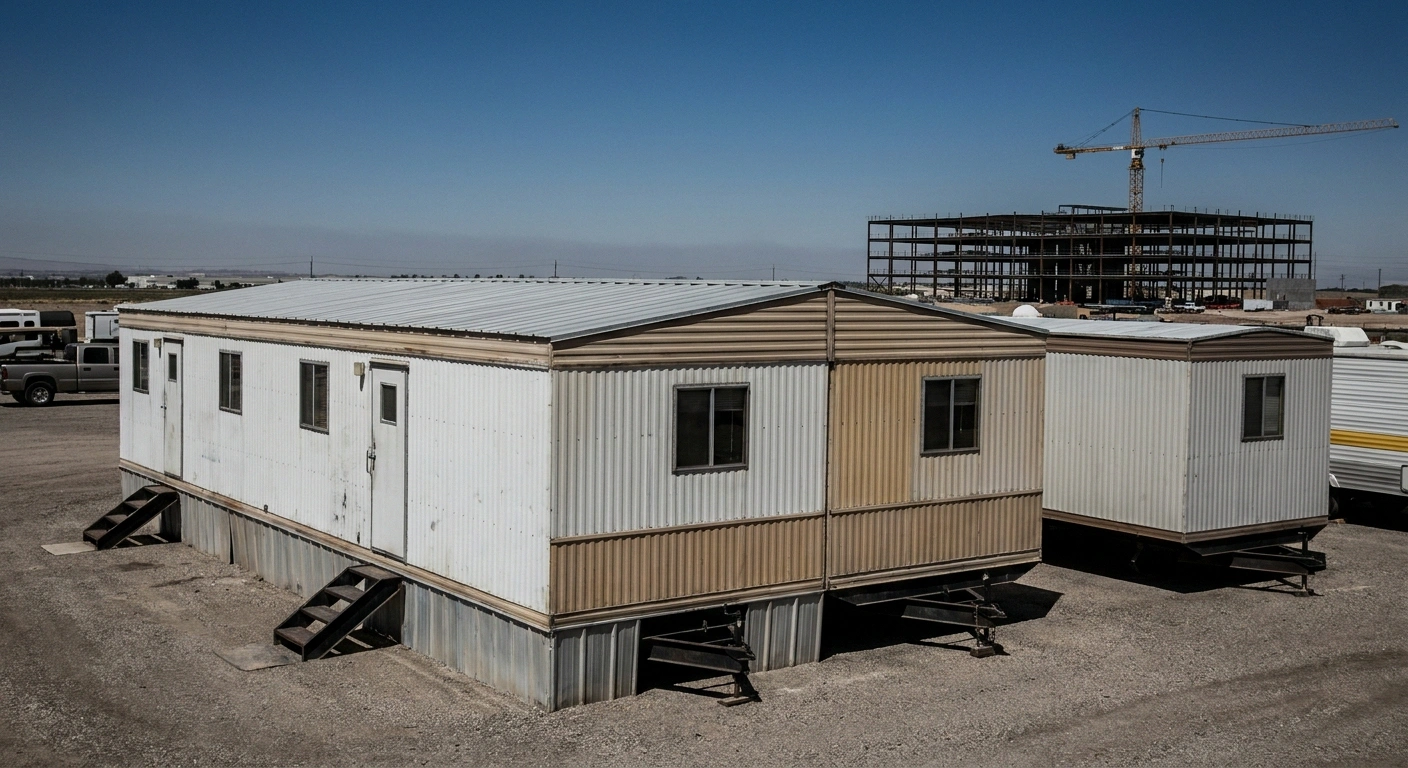
Sizes & Layouts
Common Double-Wide Sizes & Layouts
Double-wides are described by the mated footprint — the combined width of the two sections by their shared length. The common band runs from about 24×44 up to 24×60, with a 20-wide pairing of two 10-foot sections (in the class of a 10×44) at the smaller end. The table below lists the configurations suppliers quote most often, with the approximate mated footprint and the layout each one tends to carry. Lengths track the same ladder as the largest single-wides, so a 24×60 mates two units in the class of a 12×60, a 24×50 pairs two 12×50 sections, and a 24×44 pairs two 12×44 sections.
Layout is where the width pays off. A 24×44 already opens up enough floor for a generous bullpen plus a conference room; by 24×60 you can run a bullpen, a conference room, multiple private offices, and a restroom in one continuous space. Treat the typical-use column as a planning starting point — the same footprint can be configured open or heavily partitioned, and the partitions are what consume the floor that would otherwise seat people.
| Size (ft) | Approx. footprint | Typical use |
|---|---|---|
| 20 × 44 | ~880 sq ft | Open bullpen plus a small conference area; two 10-ft sections mated |
| 24 × 44 | ~1,056 sq ft | Bullpen plus a full conference room; two 12-ft sections mated |
| 24 × 50 | ~1,200 sq ft | Bullpen, conference room, and one or two private offices |
| 24 × 60 | ~1,440 sq ft | Full project HQ — bullpen, conference room, several offices, restroom |
When It Wins
When A Double-Wide Beats Two Single-Wides
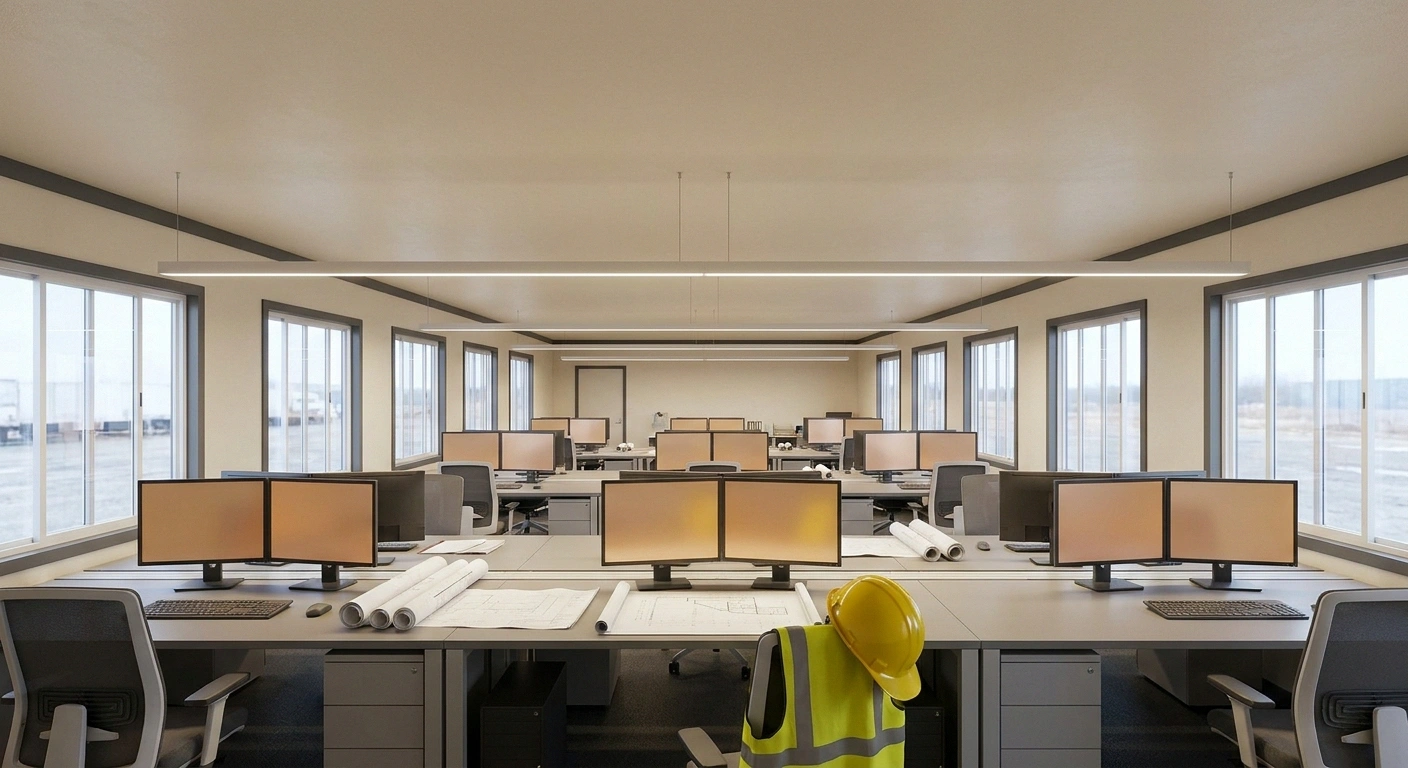
The honest comparison is not double-wide versus single-wide — it is one double-wide versus two separate single-wides parked side by side. On paper the square footage can look similar, so the real question is whether you need the rooms connected. A double-wide gives you one continuous interior: you can walk from the bullpen into the conference room and past the private offices without stepping outside. Two single-wides give you the same desks split across two boxes with a gap between them, which works for storage or overflow but breaks down the moment you want a meeting room everyone shares.
A double-wide wins when the project is large, long-running, and needs a single command center — a conference room and several private offices side by side, an open bullpen for the field team, all under one roof. The connected layout is the payoff: side-by-side rooms a single 8-, 10-, or 12-foot box cannot fit, no matter its length. Two single-wides win when the need is really two separate functions — say an office plus a standalone breakroom or storage — or when site access cannot accommodate the mating crew and the two-section set.
Cost and logistics tip the call. A double-wide is two deliveries plus a mating crew and more teardown; two single-wides are two simpler, independent sets. If you are weighing the two paths and lean toward buying rather than renting either way, the used construction trailer market is deepest in single-wide footprints, which can make a pair of single-wides easier to source. Get the layout requirement settled first — connected rooms or separate functions — then compare quotes on whichever path fits.

Quote Anatomy
What Suppliers Compare On A Double-Wide Quote
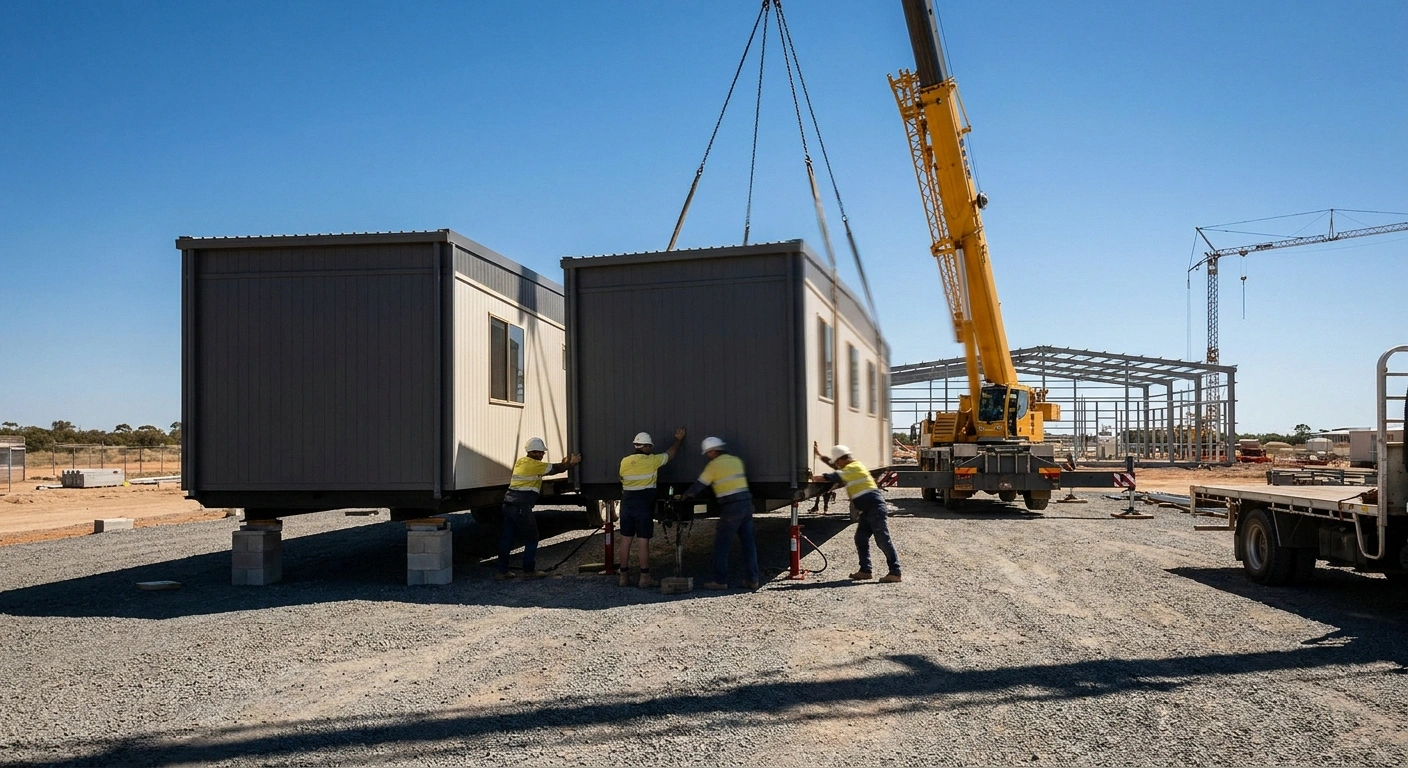
A double-wide quote has more moving parts than a single-wide quote, because the unit arrives as two pieces and gets assembled on your pad. The biggest line items are the two deliveries and the mating: each section ships on its own truck, then a crew sets and joins them with cranes or jacks, weatherproofs the seam, and connects the two halves into one interior. Ask each supplier to itemize delivery and setup separately from the unit itself, so you can see the assembly cost and compare bids on the same basis. The same teardown applies at the end of the job, so confirm whether pickup is included or quoted later.
Transport is the next driver. Each section of a typical double-wide is a 12-foot-wide body, which ships as an oversize load — DOT permits and sometimes a pilot escort, on every section, in both directions. Because there are two loads, those oversize costs roughly double versus a single 12-wide. Pair that with the mating crew and you have the core of why a double-wide costs more to place, and exactly the items worth pressing suppliers to spell out. You can request the same configuration as a rental or a purchase — see office trailer rental options or office trailers for sale — and compare both on identical delivery and mating terms.
Finally, confirm the configuration is quoted apples-to-apples. A bullpen, a conference room, the number of private offices, a restroom with a holding tank, HVAC tonnage for the larger volume, and ADA clearances all change the price — and width makes ADA layouts easier to fit than in a narrow single-wide. Reputable suppliers will quote the exact mated footprint and layout you specify; give every bidder the same spec so the comparison is clean.
Common Questions
FAQ — Double-Wide Office Trailers
What is a double-wide office trailer?
A double-wide office trailer is two trailer sections delivered separately and joined on site along their long sides to form one wide room, typically 20 to 24 feet across once mated. That extra width gives you a column-free open floor that a single-wide cannot match, with room for a bullpen, a conference room, and several private offices side by side. The trade-off is logistics: a double-wide arrives as two loads and needs a crew to set and join the sections, so it carries more delivery and setup than any single-wide. It is the step up you take when even the largest single-wide, the 12×60, runs out of room.
How wide is a double-wide office trailer?
A double-wide is typically 20 to 24 feet wide once the two sections are mated. The most common version pairs two 12-foot sections for about 24 feet of width, while a smaller pairing of two 10-foot sections lands around 20 feet. That compares to a single-wide, which comes in 8, 10, and 12-foot widths as one box. The width is the whole point: the extra room across is what allows side-by-side rooms and an open bullpen instead of a single narrow run of desks down a hallway.
What sizes do double-wide office trailers come in?
Common double-wide footprints run from about 24×44 up to 24×60, with a 20×44 pairing of two 10-foot sections at the smaller end. A 24×44 is roughly 1,056 square feet and fits a bullpen plus a conference room; a 24×60 is about 1,440 square feet and can carry a bullpen, a conference room, several private offices, and a restroom in one continuous space. Lengths track the same ladder as the largest single-wides, so a 24×60 mates two units in the class of a 12×60. Treat any typical-use description as a planning starting point, since the same footprint can be configured open or heavily partitioned.
Is a double-wide better than two single-wide trailers?
It depends on whether you need the rooms connected. A double-wide gives you one continuous interior, so you can walk from the bullpen to the conference room to the private offices without stepping outside. Two single-wides give you similar desks split across two separate boxes with a gap between them, which works for separate functions like an office plus a standalone breakroom or storage. A double-wide wins when a large, long-running project needs a single connected command center; two single-wides win when the need is really two distinct spaces or when site access cannot accommodate the mating crew and the two-section set. Settle the layout requirement first, then compare quotes on whichever path fits.
How is a double-wide office trailer delivered and set up?
A double-wide arrives as two separate loads, each section on its own truck. A crew then sets the two halves on the prepared pad, joins them along their long sides with cranes or leveling jacks, weatherproofs the seam, and connects the two halves into one interior. Each 12-foot-wide section typically ships as an oversize load that needs DOT permits and sometimes a pilot escort, in both directions, so those transport costs roughly double versus a single 12-wide. The same mating crew handles teardown at the end of the job. Ask each supplier to itemize the two deliveries and the assembly separately so you can compare bids on the same basis.
How does this quote-comparison service work?
You submit one form with your project type, the size you need, rent or buy, delivery ZIP, project duration, configuration needs, and contact email. We send the request to up to 5 reputable office trailer suppliers serving your market. They submit competing quotes, typically within an hour during business days. You compare and decide. It is free, with no obligation. We are paid by suppliers when they win your business — you pay nothing.
Compare Double-Wide Office Trailers With Up To 5 Competing Quotes
One form, any double-wide configuration from a 20×44 to a 24×60. Up to 5 reputable suppliers compete for your office trailer job. Quotes back in about an hour during business days. Free, no obligation. No pushy sales calls.