
Office Trailer Rentals in Austin, TX — Compare Up To 5 Local Suppliers
Up to 5 reputable suppliers in the Austin market compete for your jobsite. About one hour to get quotes back. No obligation. We’re paid by suppliers when they win your business — you pay nothing.
How It Works In Austin
Office Trailer Rental In Austin — The Procurement Reality
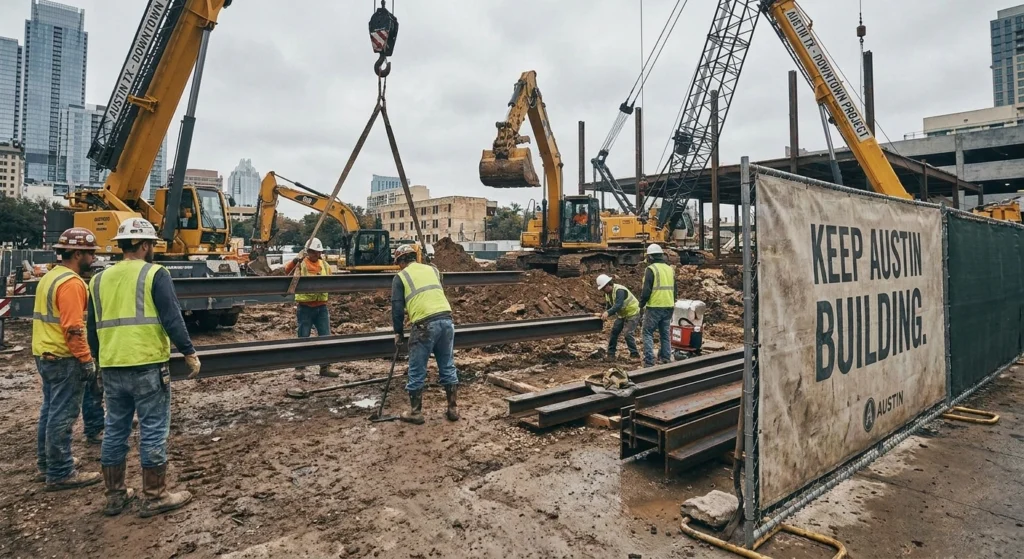
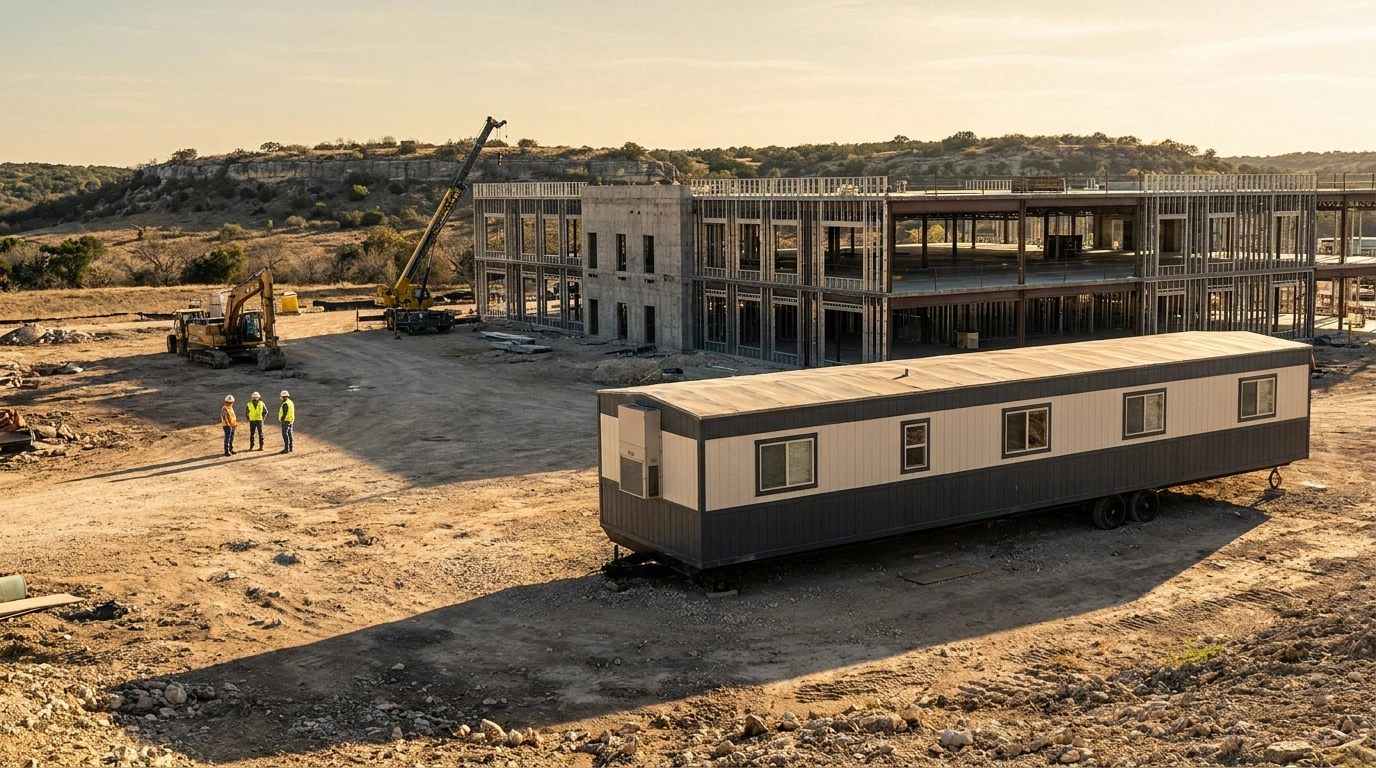
Austin is one of the most active construction metros in the country, and the office-trailer demand here is shaped by four overlapping waves of work. Tech-campus construction drives long-duration field offices: the Samsung Taylor semiconductor fab north in Williamson County, the Tesla Gigafactory southeast in Travis County, Apple’s north Austin campus, and ongoing Meta, Oracle, and Google expansion all run multi-year programs that need project HQs measured in years, not months. Multi-family residential is the second wave — downtown high-rise, South Congress, East Austin, Mueller, and the Domain North/South corridor are stacked with mid-rise and high-rise builds. Highway and transit work is the third — the I-35 Capital Express Central project, MoPac corridor work, SH-130 / SH-45 expansion, and Project Connect light-rail and metro lines pull civil contractors into multi-year programs. Healthcare campus expansion across Dell Seton, Ascension Seton, St. David’s, and Texas Children’s Austin rounds out the mix.
The procurement reality here is favorable. The Austin / Round Rock / Pflugerville metro is yard-rich — national players, regional Texas suppliers, and dedicated Central Texas operators all run inventory inside Travis, Williamson, and Hays Counties. Stock 8×20 and 10×40 units typically don’t have to be sourced from Houston or San Antonio yards the way they would in a less-served market. The flip side: every supplier in the metro sees the same demand pipeline. When you only call one or two of them, you’re not seeing the spread — you’re getting their first number. With five competing quotes on the same spec, the line-item differences sort themselves out.
Our role is to put your spec in front of up to 5 reputable suppliers serving Austin and the Central Texas market simultaneously. You get the comparison, you keep the leverage, and you skip the five separate sales calls it would otherwise take to get there.
What’s In The Quote
What To Expect From Your Austin Office Trailer Quotes
Austin quotes from different suppliers will look superficially alike — same trailer sizes, same monthly rate range — and then diverge in the line items that actually drive the total. Below is the anatomy of a typical Austin office trailer quote and what to compare line-for-line when you have multiple in hand.
| Line Item | What It Is | What To Watch |
|---|---|---|
| Base monthly rate | The trailer rental itself. Depends on size (8×20 through 24×56) and condition (new vs. used). | Lowest base rate is sometimes the highest total cost — delivery, setup, and lease minimum can flip the math. |
| Delivery to jobsite | Round-trip transport from supplier yard to your site. Yard location across Travis / Williamson / Hays matters. | A supplier running out of a Round Rock or Pflugerville yard quotes different delivery than one routing from San Antonio or Hill Country. Ask for the round-trip line item. Hill Country and Lake Travis jobsites with narrow rural access can carry a surcharge. |
| Setup & install | Leveling, blocking, tie-downs, step or ramp install. Texas anchor spec accounts for spring severe-storm and tornado exposure. | Summer-heat HVAC capacity matters more here than in most metros — if the unit is on-site June through September, ask whether the standard HVAC is sized for Central Texas heat or whether an upgrade is needed. Bundled setup is fine if you know what’s included. |
| Lease term & minimum | Most Austin suppliers have a 1-month minimum; longer terms drop the monthly rate. Tech-campus and infrastructure programs commonly lock 24-36 month terms. | If your project window is uncertain (common on Project Connect-adjacent or DSD-permitted work), ask about month-to-month after the minimum and any early-pickup fee. |
| Restroom & ADA premium | Restroom-equipped or ADA-compliant units. Restroom units may also need a water and sewer hookup on the jobsite, which becomes a permit question in MUD / PUD districts. | Plumbing setup, tank service interval, and water-hookup permit in drought-restricted districts are separate logistics. Confirm what’s bundled and what’s billed. |
| Pickup at term | Removal back to supplier yard at end of lease. | I-35 corridor traffic and Project Connect construction zones can constrain delivery and pickup windows. Sometimes pickup is included, sometimes a flat fee, sometimes prorated. Should be itemized. |
When you have five competing bids open side-by-side on the same 10×40 unit over an 18-month term in this market, the spread is rarely about the trailer itself — it’s about how delivery, setup, lease minimum, and pickup are bundled. That spread is the value of comparison.

Local Logistics
Austin Delivery, Permits, And Site Logistics
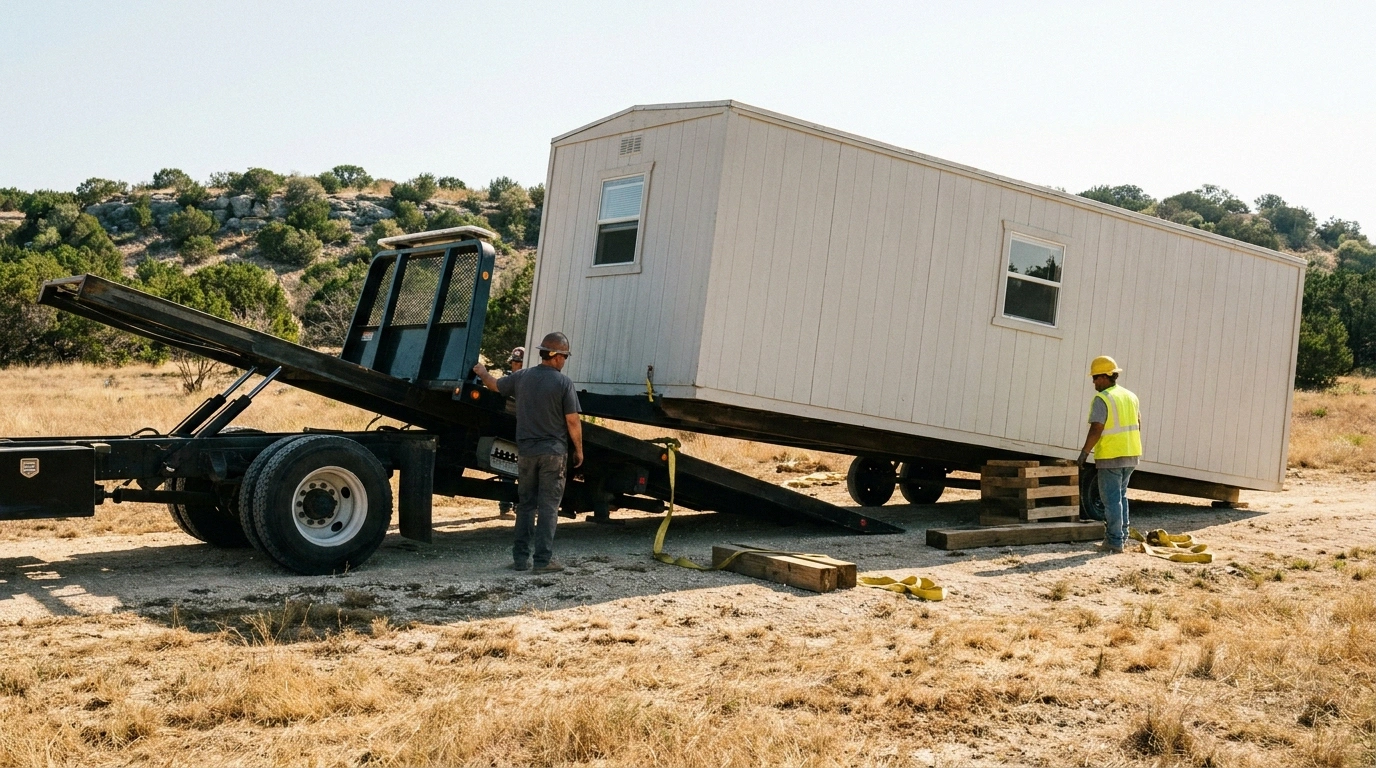
Delivery into the Austin metro is typically 3-7 business days from quote acceptance for stock 8×20 and 10×40 units, helped by the density of supplier yards inside Travis and Williamson Counties. Specialty configurations — 12×60 double-wides, ADA-compliant units, restroom-equipped variants, custom layouts — run 2-3 weeks. Summer heat is the real seasonal factor: HVAC capacity, insulation spec, and ground-anchor temperature considerations matter more in Austin than in most metros, especially for units on-site June through September. Spring brings the severe-storm and tornado threat, which is what drives the tie-down and anchor spec here — not hurricanes, which are a coastal concern (Houston, Corpus Christi), not a Central Texas one.
On permits and site placement: Austin is a layered jurisdiction and contractors should defer to whichever authority covers the specific parcel. Inside the city limits, the City of Austin Development Services Department handles placement review. Unincorporated areas in Travis, Williamson, and Hays Counties go through their respective county offices. TxDOT handles transit permits for the actual road delivery. Texas does not have a single state-level approval the way California does for commercial coaches — the Texas Department of Licensing and Regulation (TDLR) reviews certain commercial-coach matters, but placement permitting is primarily municipal or county. Common compliance points worth confirming with your local code official and supplier: site placement clearances, tie-down requirements for spring severe-storm exposure, electrical hookup, and plumbing connections for restroom-equipped units in MUD or PUD districts where water and sewer rules vary.
One Austin-specific note worth flagging: jobsite access into the Hill Country — Bee Cave, Lakeway, Dripping Springs, Westlake — can be tighter than the flat Round Rock / Pflugerville / Georgetown suburban sites. Limestone caliche subgrade, narrow rural access roads, and hill grades can change which delivery rig the supplier sends. If your jobsite has narrow access, overhead constraints, a steep grade, or limited turnaround, mention it in the form. Suppliers can match trailer size and delivery equipment to the actual approach rather than learning about it the day of delivery.
Sizes & Configurations
Common Office Trailer Sizes In The Austin Market
See used construction trailer purchase options → · See mobile office trailer rental options →
Service Area
Austin, Travis County, And The I-35 Corridor
We route quote requests to suppliers serving Austin (area codes 512, 737) and the Travis / Williamson / Hays County footprint. Common delivery destinations across the metro and Hill Country include Round Rock, Cedar Park, Pflugerville, Leander, Georgetown, Buda, Kyle, Dripping Springs, Bee Cave, Westlake, and Lakeway. For Texas-wide context, see the Texas office trailer hub, and for neighboring metros see our San Antonio, Houston, and Dallas pages.
Central Austin & UT Area
Downtown high-rise corridors, South Congress, East Austin, Mueller redevelopment, UT-Austin campus expansion, and the I-35 inner-loop corridor. Tight urban access, layered Development Services Department review.
North & Northwest (Williamson Co.)
Domain North / South, Round Rock, Cedar Park, Leander, Pflugerville, Georgetown. Tech campus construction (Samsung Taylor, Apple), suburban multi-family, and the SH-130 / SH-45 corridor. Largest concentration of supplier yards.
South, Southwest & Hill Country
South Austin, Buda, Kyle (Hays County), Dripping Springs, Bee Cave, Westlake, Lakeway. Hill Country grades, limestone caliche, narrow rural access — mention access constraints in the form so suppliers can match equipment.
Common Questions
FAQ — Austin Office Trailers
How fast can a mobile office trailer be delivered to an Austin jobsite?
Stock 8×20 and 10×40 units delivered into the Austin metro typically arrive within 3-7 business days from quote acceptance. The Austin / Round Rock / Pflugerville corridor is yard-rich — most suppliers run inventory inside Travis or Williamson County, so delivery windows here tend to be tighter than in less-served Texas metros. Specialty configurations — 12×60 double-wides, ADA-compliant units, restroom-equipped variants — run 2-3 weeks because they often have to be sourced from a specific yard. I-35 corridor traffic and Project Connect construction zones can affect delivery scheduling on specific routes.
Do I need a permit to place an office trailer in Austin?
In most cases, yes — and the layers matter. Inside the city limits, the City of Austin Development Services Department handles placement review. In unincorporated parts of Travis, Williamson, or Hays Counties, the relevant county office handles it. TxDOT issues transit permits for the actual road delivery, and the Texas Department of Licensing and Regulation reviews certain commercial-coach matters. Texas does not have a single state-level commercial-coach approval the way California does. Confirm with the jurisdiction your jobsite sits in. Common items to ask about: site placement clearances, tie-down requirements for spring severe-storm exposure, electrical hookup permits, and plumbing connection rules for restroom-equipped units in MUD or PUD districts. Reputable suppliers handle transit permits for delivery; placement permits are typically the contractor’s responsibility.
What sizes are common in the Austin market?
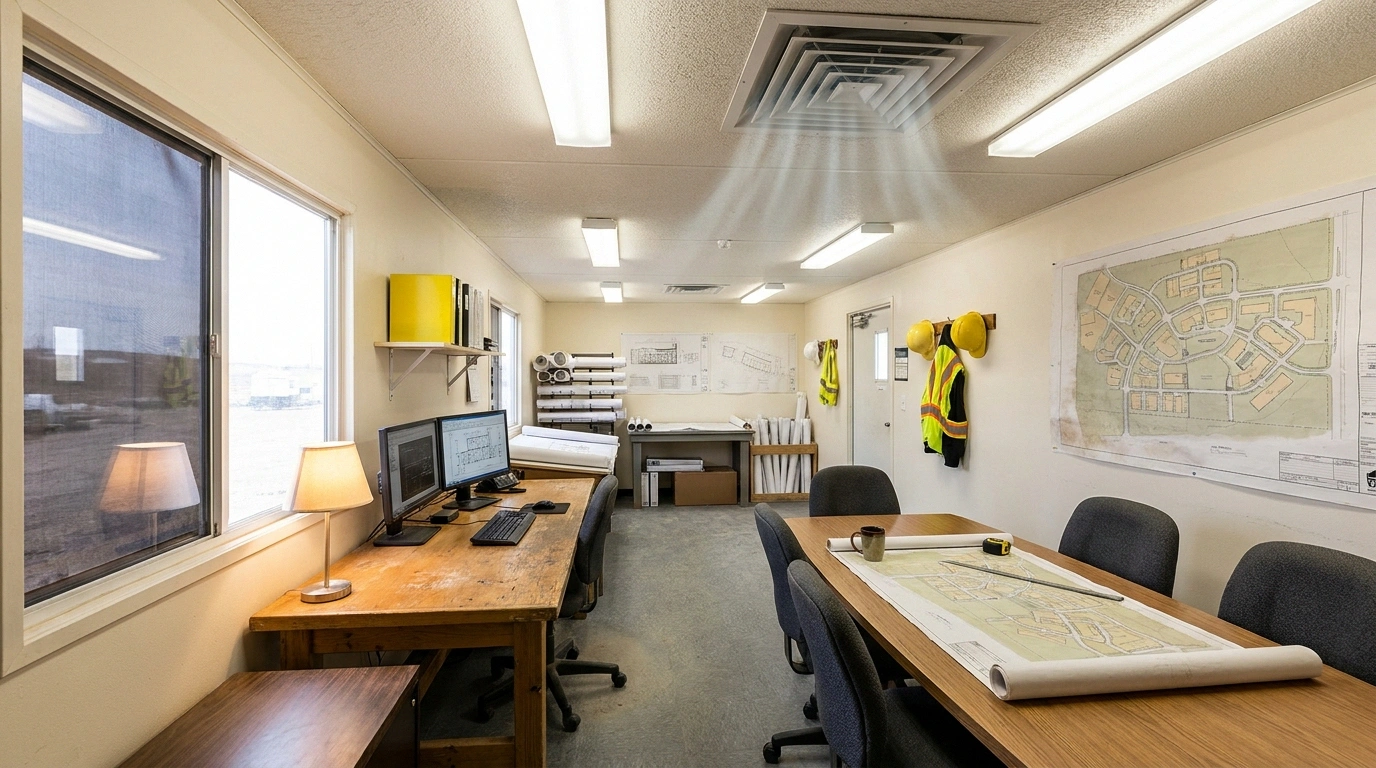
The full range. Most common in the Austin metro: 8×20 for a foreman office or guard booth, 8×28 or 8×32 for a small crew, 10×40 and 10×44 for a crew of 3-5 with a plan room, and 12×60 for a full project headquarters with conference space and restroom. Double-wide 24×56 units are common on tech-campus mega-programs (Samsung Taylor, Tesla Gigafactory, Apple campus) and on large healthcare expansions. Restroom-equipped and ADA-compliant variants exist in every size class but have thinner inventory than standard configurations.
What does a typical Austin office trailer quote include?
A complete quote includes: base monthly rate (or purchase price), delivery to your jobsite, setup and leveling, lease term and minimum, and pickup at term end. Premiums apply for restroom-equipped or ADA-compliant units. Summer-heat HVAC capacity may be a separate line item for units on-site June through September, and Hill Country jobsite access can carry a delivery surcharge for narrow rural routes. Compare line-by-line across suppliers — the spread on the same trailer size over the same lease term usually comes from how delivery, setup, and pickup are bundled, not from differences in the trailer itself.
What industries in Austin use mobile office trailers most often?
Tech-campus construction is the largest driver — Samsung Taylor (Williamson County), Tesla Gigafactory (Travis County), Apple’s north Austin campus, and ongoing Meta, Oracle, and Google expansion. Multi-family residential development across downtown, South Congress, East Austin, Mueller, and the Domain corridor is the second wave. Infrastructure programs — I-35 Capital Express Central, MoPac, SH-130 / SH-45, Project Connect light-rail and metro — pull civil contractors into multi-year programs. Healthcare expansion (Dell Seton, Ascension Seton, St. David’s, Texas Children’s Austin), UT-Austin campus construction, hospitality, and Hill Country residential round out the mix.
How does Austin summer heat affect office trailer setup?
Heat matters more here than in most metros. Standard office-trailer HVAC is sized for general use, but units on-site June through September in Central Texas often need an upgraded HVAC spec to hold a usable interior temperature. Ground-anchor and tie-down spec also accounts for high-temperature ground conditions and spring severe-storm exposure. When you submit the form, mention if the unit will be on-site through the summer — suppliers can spec HVAC capacity, insulation, and reflective roofing accordingly. Door seals, weatherstripping, and vapor barriers around the floor are worth confirming for any long-duration summer setup.
How does this service work?
You submit one form with project type, size or size range, rent or buy, delivery ZIP, project duration, and contact email. We send the request to up to 5 reputable office trailer suppliers serving the Austin market. They submit competing quotes, typically within an hour during business days. You compare and decide. Free, no obligation. We are paid by suppliers when they win your business — you pay nothing.
Stop Calling Austin Suppliers One At A Time
One form. Up to 5 reputable suppliers compete for your Austin office trailer job. Quotes back in about an hour during business days. Free, no obligation. No pushy sales calls.