
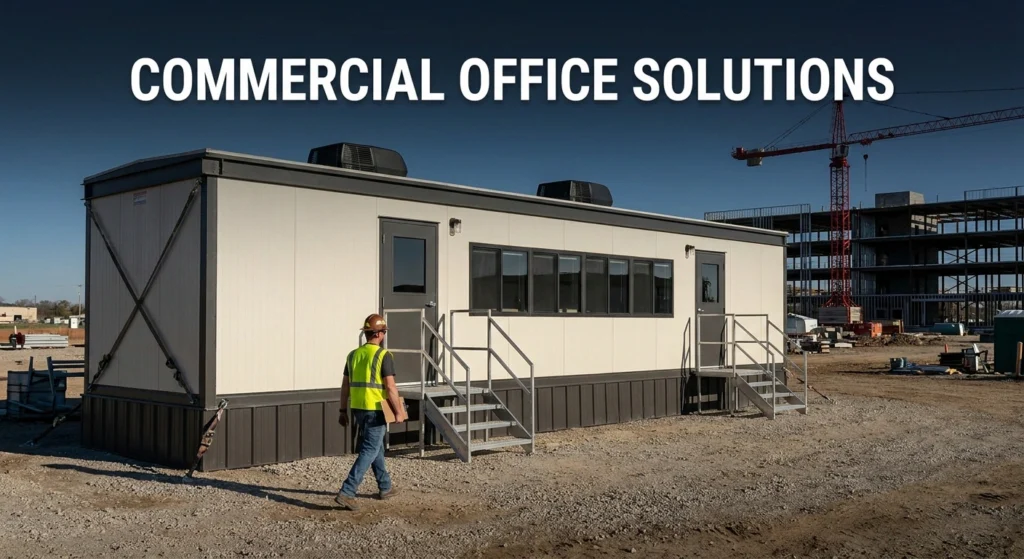
Office Trailer Dimensions — Sizes, Square Footage & Capacity
Compare up to 5 quotes from reputable suppliers. About one hour to get bids back. Free, no obligation — you pay nothing; suppliers pay us when they win your business.
Standard Sizes
Standard Office Trailer Sizes
Construction office trailers come in a predictable ladder of sizes, from a compact 8×16 foreman’s office up to the 12×60 — the largest and most common single-wide. Width comes in three standard bands: 8 feet, 10 feet, and 12 feet. Length runs from 16 to 60 feet. The two numbers together set the footprint, and the footprint sets everything else: how many desks fit, whether you can add a conference room or a restroom, and how the unit ships to your site.
The table below lists every size we quote, with its footprint in feet and meters, approximate square footage, and a typical occupancy. Occupancy varies with the layout — an open bullpen seats more people than the same trailer divided into private offices, a conference room, and a restroom — so treat the figures as a planning starting point, then open each size’s page for its configurations and quote anatomy.
| Size (ft) | Size (m) | Approx. footprint | Typical occupancy |
|---|---|---|---|
| 8 × 16 | 2.44 × 4.88 | ~128 sq ft | 1-2 |
| 8 × 20 | 2.44 × 6.10 | ~160 sq ft | 2-3 |
| 8 × 24 | 2.44 × 7.32 | ~192 sq ft | 2-4 |
| 8 × 28 | 2.44 × 8.53 | ~224 sq ft | 3-5 |
| 8 × 32 | 2.44 × 9.75 | ~256 sq ft | 4-6 |
| 10 × 36 | 3.05 × 10.97 | ~360 sq ft | 5-7 |
| 10 × 44 | 3.05 × 13.41 | ~440 sq ft | 6-8 |
| 10 × 50 | 3.05 × 15.24 | ~500 sq ft | 7-9 |
| 10 × 60 | 3.05 × 18.29 | ~600 sq ft | 8-10 |
| 12 × 44 | 3.66 × 13.41 | ~528 sq ft | 7-9 |
| 12 × 50 | 3.66 × 15.24 | ~600 sq ft | 8-11 |
| 12 × 60 | 3.66 × 18.29 | ~720 sq ft | 8-12 |
Sizing Guide
How To Choose A Size For Your Crew
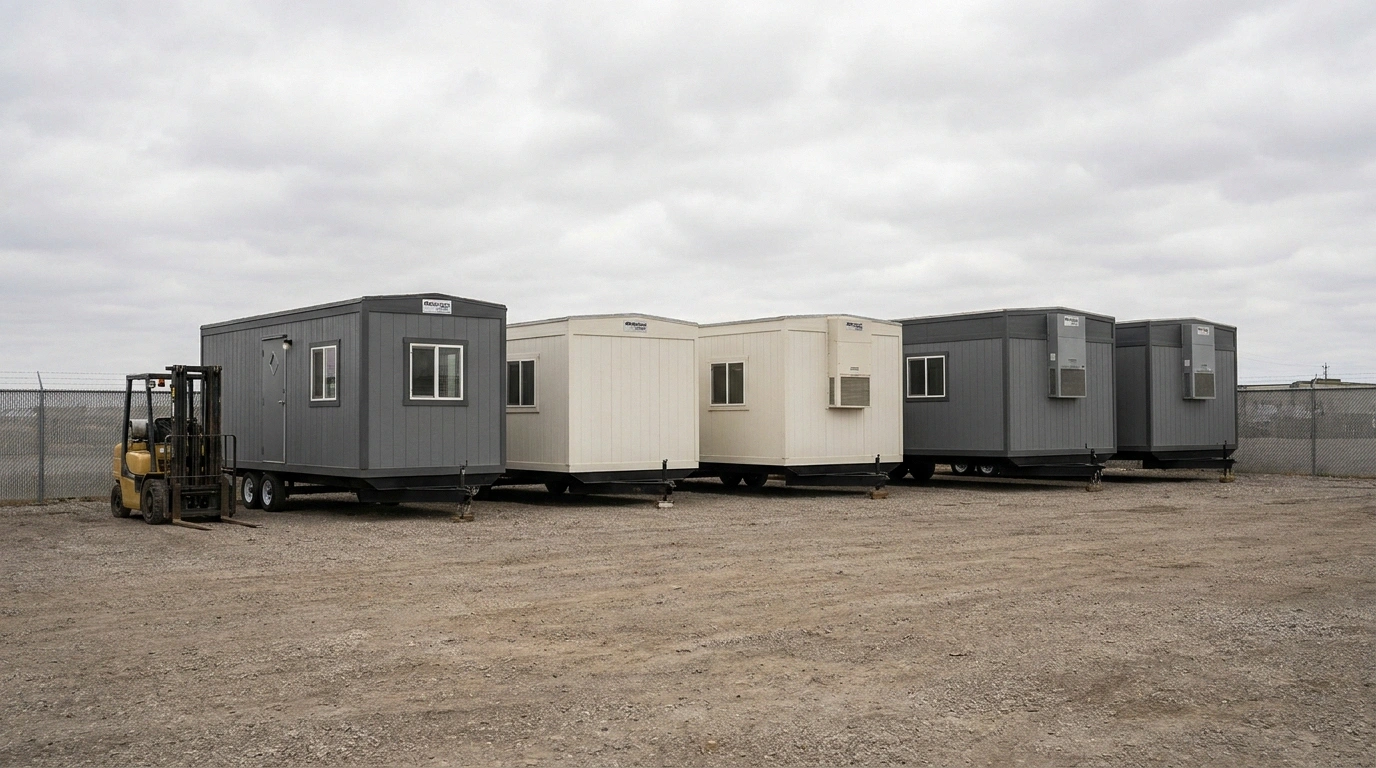
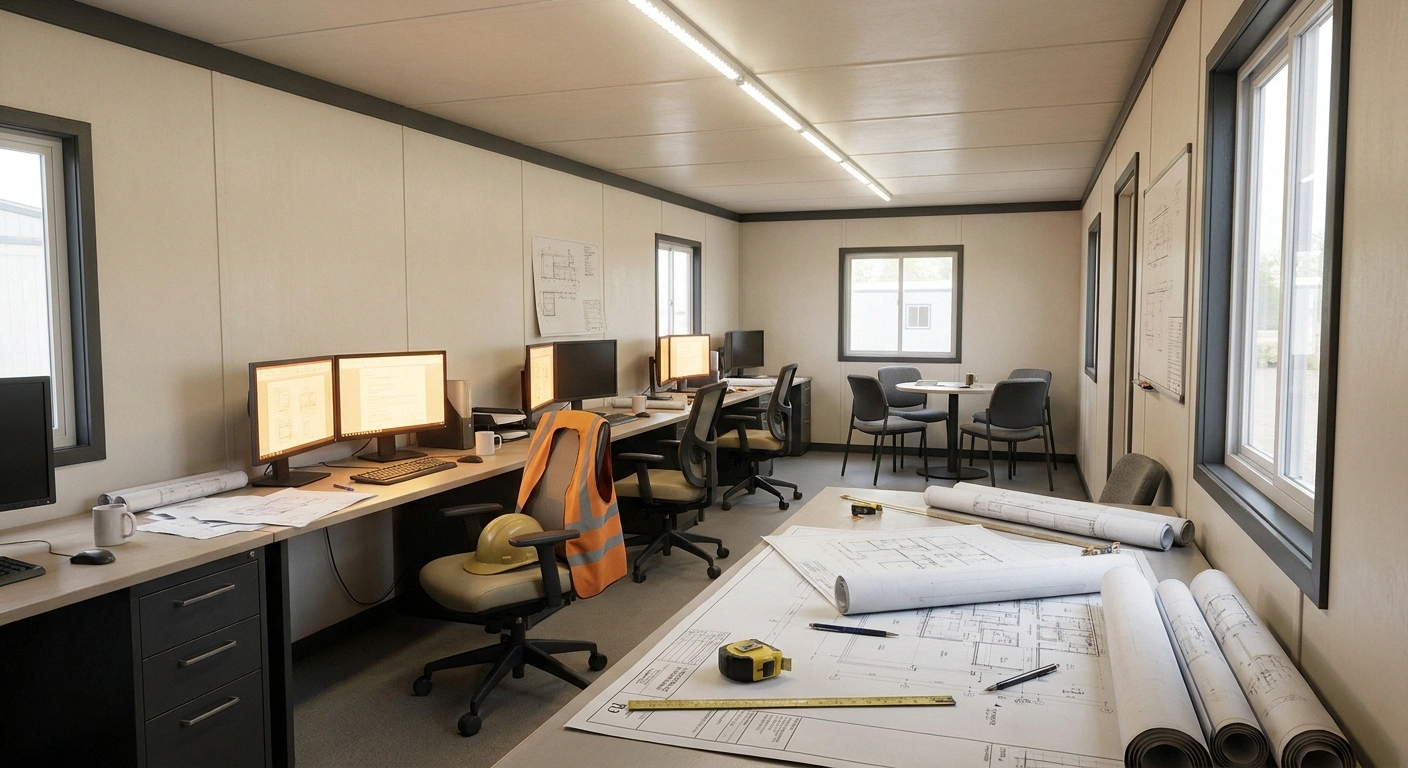
Start with the number of people who need a desk on site at the same time, then build up from there. A sole superintendent who needs a quiet place for paperwork and a place to spread drawings fits comfortably in an 8×16 or 8×20. A small crew with a foreman, a project engineer, and a shared plan table wants something in the 8×24 to 8×32 range. Once you are seating a project manager plus supers, a safety lead, and a document-control desk, you are into the 10-wide sizes, and a full project headquarters with a conference room belongs in a 12-wide.
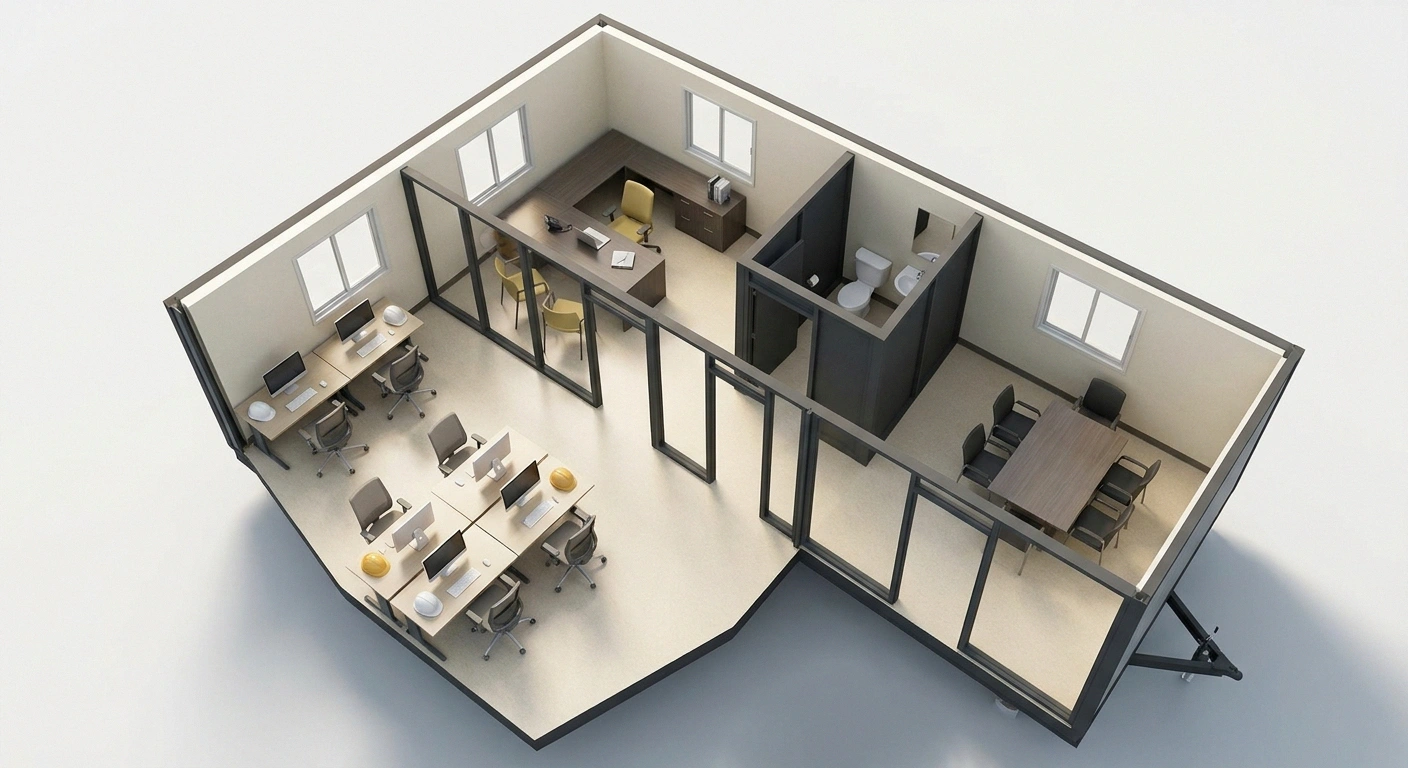
Then add space for the things that are not desks. A conference table for site meetings, a plan-review counter, a restroom, and ADA clearances all consume floor area that no longer seats a person. The 10-foot and 12-foot widths matter here more than length: the extra two to four feet of width is what turns a narrow corridor of desks into rooms you can actually hold a meeting in. If you expect the crew to grow as the project ramps, size up one step rather than crowding the unit you start with.
Finally, factor how long the unit stays on site and whether you will reuse it. A short, one-off job usually points to a rental, where the supplier handles delivery and pickup; recurring use across projects can favor a purchase. You can cost both paths against the same size — see office trailer rental options or office trailers for sale — but get the size right first, because the footprint drives the quote more than the rent-or-buy decision does.
Footprints
Single-Wide vs Double-Wide Footprints
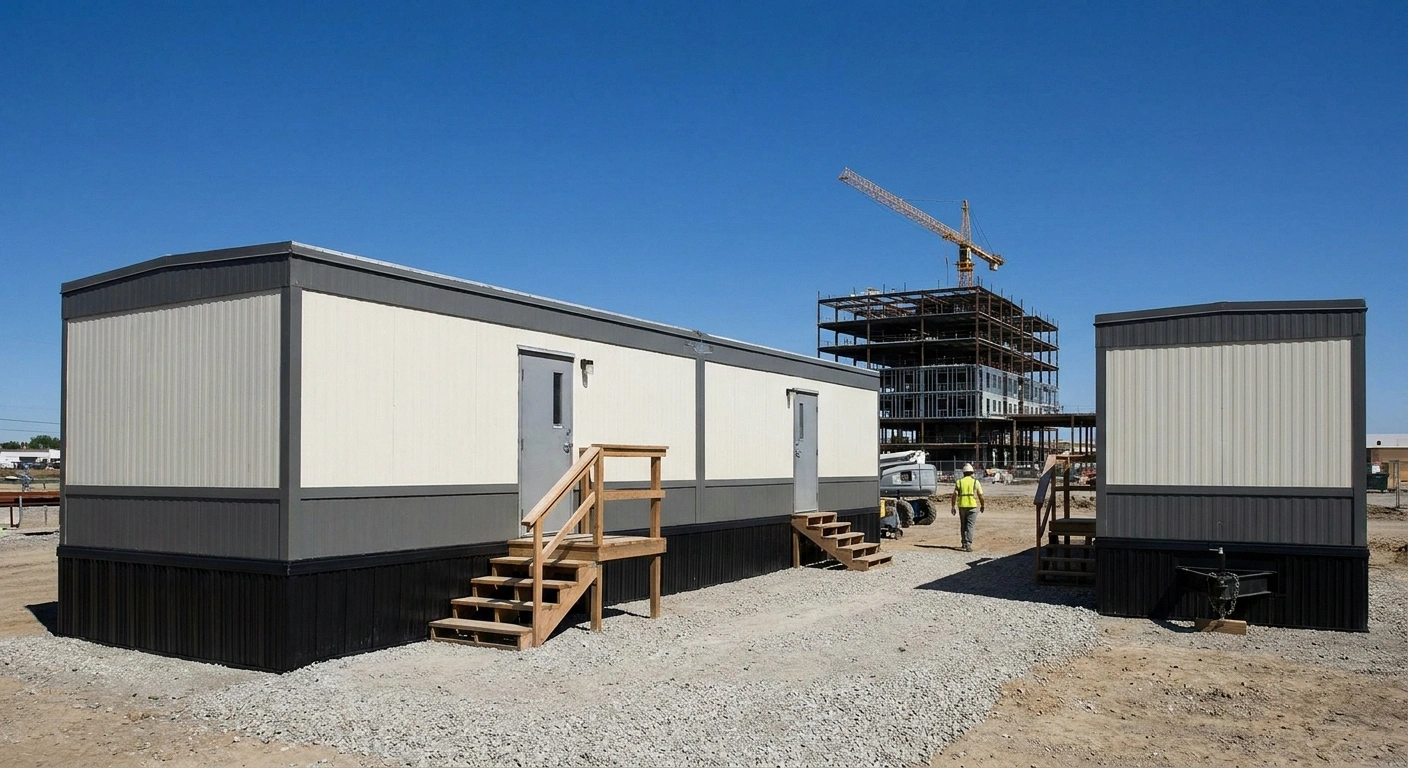
Every size in the table above is a single-wide — one self-contained box that ships as a single unit, 8, 10, or 12 feet wide and up to 60 feet long. The 12×60 is the largest single-wide in common inventory: the maximum footprint you can set on a pad before you step up to a double-wide. For most jobsites, a single-wide is the right answer, because it delivers, sets, and removes in one move and the deepest inventory and the most competing quotes live in these sizes.
A double-wide is two trailer sections delivered separately and joined on site to create a single wider room — typically 20 to 24 feet across once mated. That extra width buys an open floor plan a single-wide cannot match: a large conference room, a bullpen, and several private offices side by side instead of strung down a hall. The trade-off is logistics. A double-wide is two deliveries, a mating crew, and more setup, so it makes sense only when the project is large enough and long enough to justify it.
Transport is the other dividing line. An 8-wide ships as a standard load. A 12-wide ships as an oversize load, which means DOT permits and sometimes a pilot escort on both delivery and pickup — a real cost worth comparing across suppliers. If you are weighing a large single-wide against a double-wide, the 12×60 is the natural pivot point. For the purchase route on any size, the used construction trailer market is deepest in the most common single-wide footprints.
Usable Space
What Eats Into Usable Space
The footprint in the table is the exterior dimension. The space you actually work in is smaller, and the gap is worth understanding before you size a unit. Wall thickness, the hitch tongue at one end, roof-mounted HVAC chases, and the floor framing all take their cut, so usable interior area typically runs a little under the footprint number — a ~720 sq ft 12×60, for example, lands around 672 sq ft usable once those are netted out.
Interior features take the next bite, and these are choices you control. A partitioned restroom with a holding tank claims a corner. Private offices add walls and a hallway. A conference room needs clear space around the table, not just under it. ADA compliance asks for more still: a 32-inch clear door width, interior turning clearances for a wheelchair, and an accessible restroom, which is part of why ADA-ready layouts are easier to fit in the 10-foot and 12-foot widths than in an 8-wide.
The practical takeaway is to size for usable space, not the headline footprint. If you need to seat eight people and also hold site meetings and provide a restroom, do not buy exactly enough square feet for eight desks — the partitions and the restroom will leave you short. Step up a size, or plan an open layout that keeps more of the footprint as working floor. Each size’s page breaks down the configurations that fit it, so you can see how the usable space divides before you request quotes.
Common Questions
FAQ — Office Trailer Dimensions
What are the standard office trailer dimensions?
Construction office trailers come in three standard widths — 8, 10, and 12 feet — and lengths from about 16 to 60 feet. The common ladder runs 8×16, 8×20, 8×24, 8×28, and 8×32 in the 8-foot width; 10×36, 10×44, 10×50, and 10×60 in the 10-foot width; and 12×44, 12×50, and 12×60 in the 12-foot width. The 12×60 is the largest and most common single-wide. When you compare quotes, confirm the exterior footprint and the usable interior separately, since the two differ once walls, HVAC, and the hitch are netted out.
How many square feet is an office trailer?
It depends on the size. The footprint is simply width times length, so a small 8×16 is about 128 sq ft, a mid-size 10×44 is about 440 sq ft, and the largest common single-wide, the 12×60, is about 720 sq ft. Usable interior space runs a little under those numbers once you account for wall thickness, the hitch, the HVAC chases, and any restroom partition — a 12×60 usually works out to roughly 672 sq ft usable. Ask each supplier whether the square footage they quote is the footprint or the usable interior so every bid is measured the same way.
What size office trailer do I need for my crew?
Start by counting how many people need a desk on site at the same time, then add space for the things that are not desks — a plan table, a conference area, a restroom, and ADA clearances. As a rough guide, an 8×16 to 8×20 suits a sole superintendent, the 8×24 to 8×32 sizes fit a small crew, the 10-wide sizes hold a project manager plus several supers, and a 12-wide handles a full project headquarters with a conference room. If you expect the crew to grow as the project ramps, size up one step rather than crowding the unit you start with.
What is the difference between a single-wide and a double-wide office trailer?
A single-wide is one self-contained trailer, 8 to 12 feet wide and up to 60 feet long, that ships and sets as a single unit. A double-wide is two sections delivered separately and joined on site to create a wider room, typically 20 to 24 feet across once mated, which allows an open floor plan a single-wide cannot match. Single-wides cover the great majority of jobsites and have the deepest inventory; a double-wide makes sense when the project is large and long enough to justify two deliveries and the extra setup. The 12×60 is the largest single-wide and the usual pivot point to a double-wide.
How wide is a construction office trailer?
Standard widths are 8, 10, and 12 feet. The width matters as much as the length, because the extra two to four feet is what turns a narrow run of desks into rooms you can hold a meeting in, and it is what makes ADA clearances and private offices fit comfortably. Width also drives transport: an 8-wide moves as a standard load, while a 12-wide ships as an oversize load that needs DOT permits and sometimes a pilot escort on both delivery and pickup. Factor that oversize cost into any quote comparison on a 12-wide unit.
How does this quote-comparison service work?
You submit one form with your project type, the size you need, rent or buy, delivery ZIP, project duration, configuration needs, and contact email. We send the request to up to 5 reputable office trailer suppliers serving your market. They submit competing quotes, typically within an hour during business days. You compare and decide. It is free, with no obligation. We are paid by suppliers when they win your business — you pay nothing.
Compare Office Trailer Sizes With Up To 5 Competing Quotes
One form, any size from an 8×16 to a 12×60. Up to 5 reputable suppliers compete for your office trailer job. Quotes back in about an hour during business days. Free, no obligation. No pushy sales calls.