
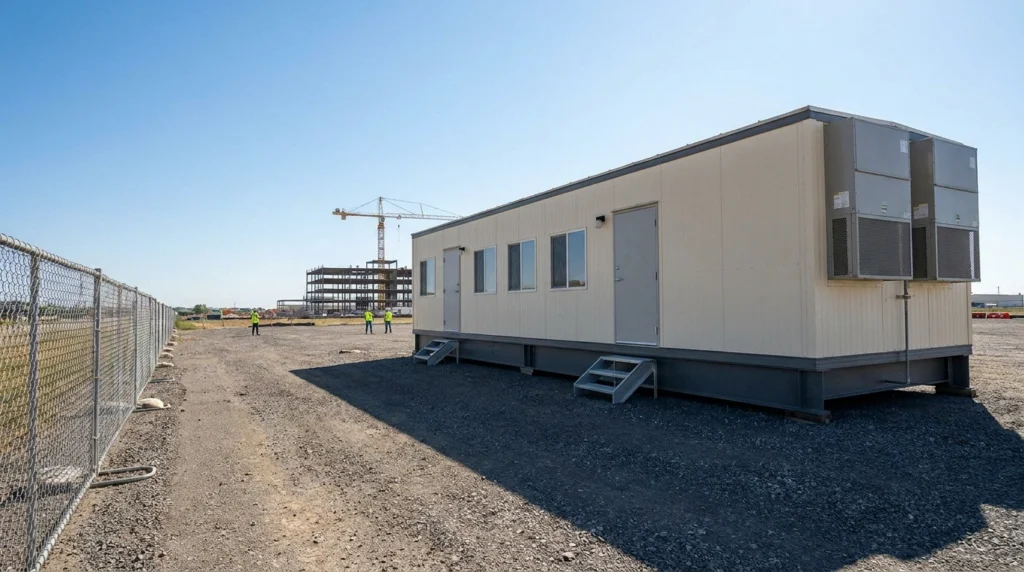
Office Trailer Setback Requirements — Property-Line & Zoning Basics
Compare up to 5 quotes from reputable suppliers who handle delivery and site logistics. About one hour to get bids back. Free, no obligation — you pay nothing; suppliers pay us when they win your business.
Start Here
What A Setback Is (And Why An Office Trailer Has One)
A setback is the minimum distance a structure has to sit back from your property lines. It is set by the zoning district your parcel falls in, and it exists so structures are not crowded against boundaries — leaving room for access, drainage, fire separation, and sight lines at intersections. On a jobsite, the office trailer is the structure that has to respect it.
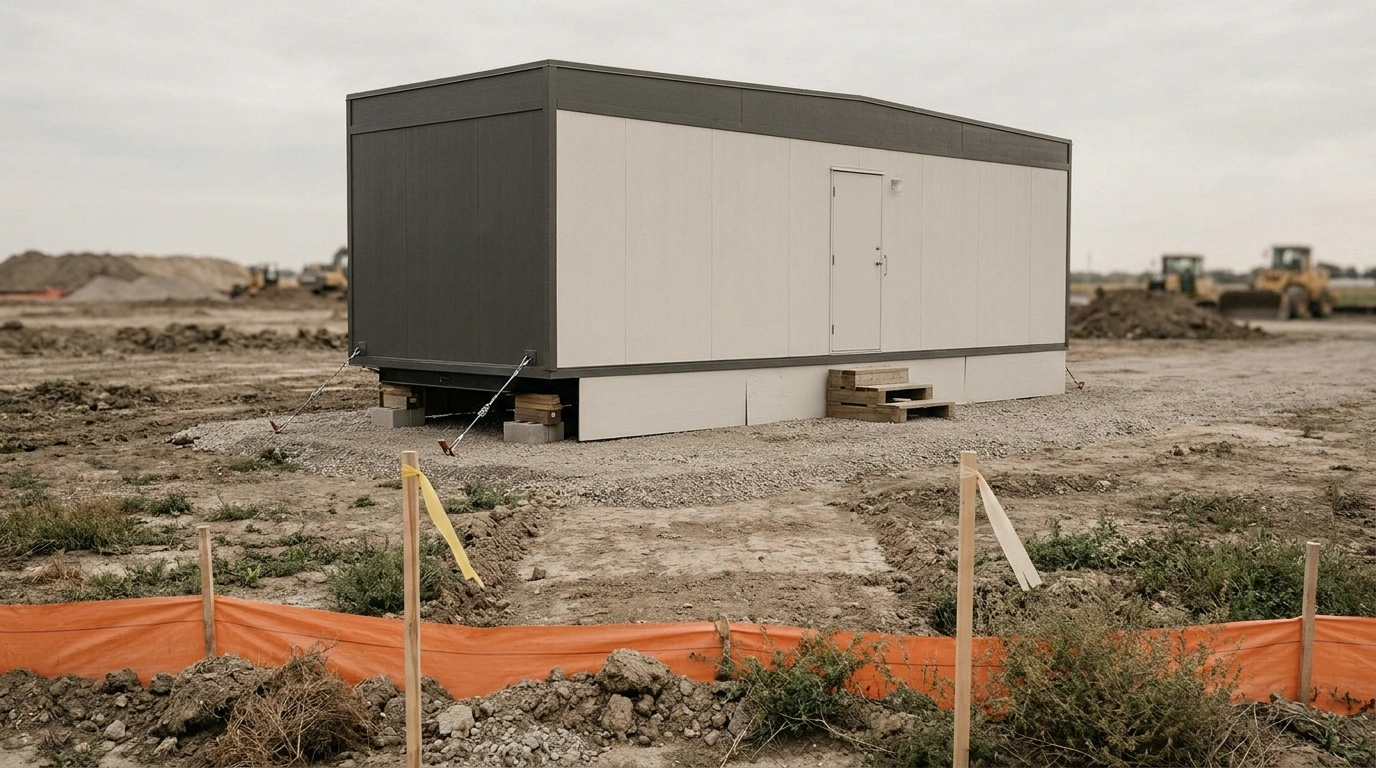
The part that catches people off guard is that a setback usually applies even though the trailer is temporary and sits on wheels or blocks. Most zoning codes measure setbacks to any structure or accessory structure, and many jurisdictions treat a placed office trailer as a temporary structure for that purpose — so “it is only temporary” is not, by itself, a reason the setback stops applying. How strictly it is enforced, and whether a short-term unit on an active site is treated differently, varies from one jurisdiction to the next.
Because the rule is local, the reliable move is to check the setback for your specific address with the city or county zoning or building department before the unit is placed. Our guide to construction trailers and zoning restrictions covers how zoning shapes where a unit can go; the rest of this page explains what the numbers usually look like, how setbacks fit alongside permits and zoning, and how to get placement built into your supplier quotes.
The Numbers
Typical Setback Distances — And Why “Typical” Is All Anyone Can Promise
There is no national setback number, and anyone who hands you one flat figure is guessing. Setbacks are written into each municipality’s zoning code, and they change with the zoning district (residential, commercial, or industrial), the type of line you are measuring to (front, side, or rear), and sometimes the shape of the lot itself.
A few patterns show up often enough to plan around — treat them as typical, not fixed. Front setbacks tend to be the largest, commonly in the range of 20 to 30-plus feet; side and rear setbacks are usually smaller, often somewhere from about 5 to 15 feet. Corner lots, easements, and larger commercial or industrial parcels can carry their own rules. Your district’s published figures are the ones that actually govern, so look them up rather than leaning on a rule of thumb.
The practical takeaway is to know roughly how much clear space sits between where the trailer will go and each property line before you commit to a size and a position. If the pad is tight, a smaller footprint or a different orientation can be the difference between a clean placement and a delay. Confirm the exact minimums with your local zoning department, and treat every number on this page as a starting point for that conversation.

How It Fits
Setbacks Vs. Permits Vs. Zoning — How They Interact
Setback, zoning, and permit sound like three separate hurdles. They are really one review looked at from three angles. Zoning is the rulebook for what can go where; the setback is one specific rule inside that rulebook; and the permit is where a jurisdiction actually checks your placement against those rules.
In practice, the zoning district sets the setback, and when a placement or temporary-use permit is required, the building department confirms the trailer sits outside every required setback before it signs off. That is why the same three questions travel together — which district am I in, what setbacks does it require, and does this placement need a permit. Our office trailer permits by state guide breaks down who issues placement versus transport permits, and our construction trailers and zoning restrictions guide covers how zoning shapes where a unit can legally sit.
On an active site already operating under a valid building permit, the trailer’s placement is often reviewed as part of that permitted work rather than separately — but the setback still has to be met. A standalone or long-term placement is more likely to get its own review. Either way, the setback is the constant and the permit is just where it gets checked, so it pays to confirm both with the same local office at the same time.
Into Your Quote
Getting A Compliant Placement Into Your Quote
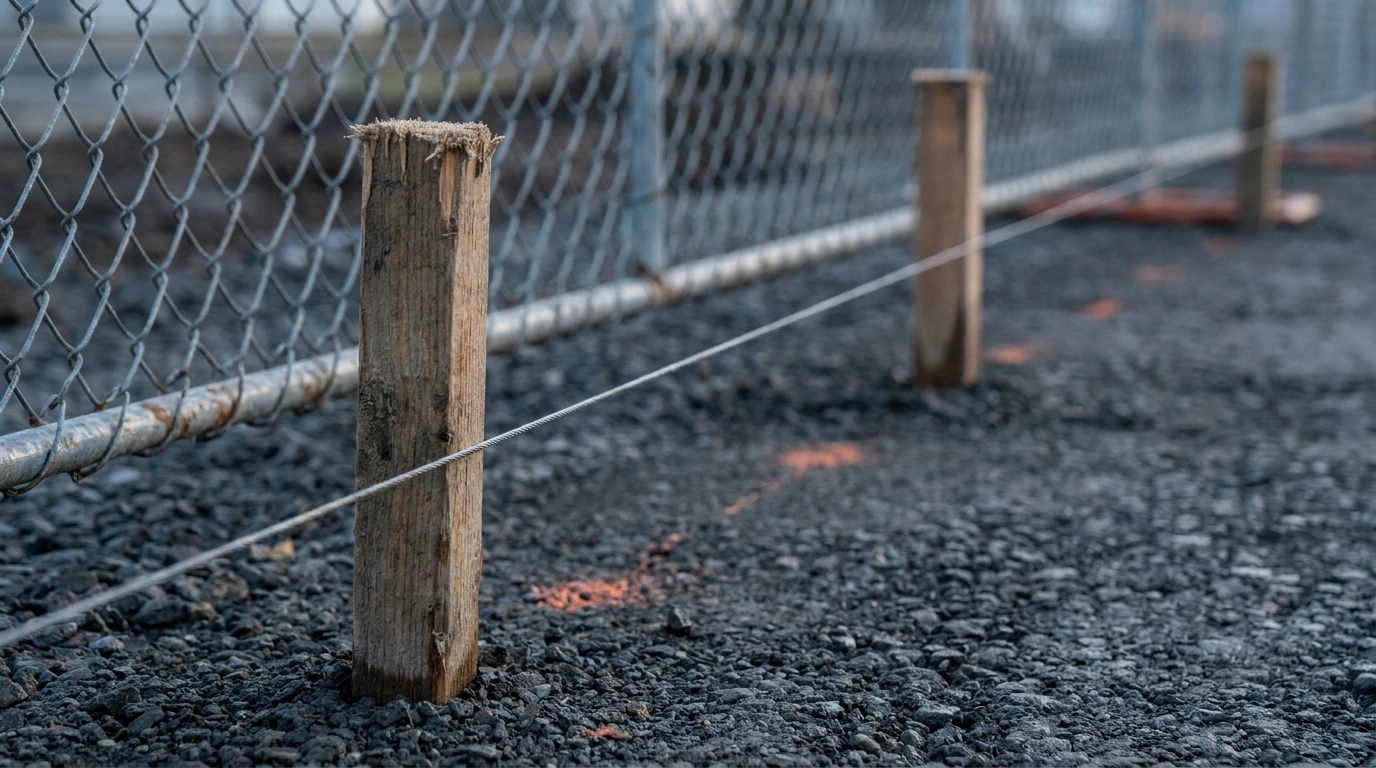
Placement is not only your problem to solve. Reputable suppliers work around setbacks, access, and anchoring every day, and the good ones will factor it into the bid if you give them the site picture. Tell them your usable pad dimensions, where the property lines and any fences or easements sit, and any local setback you already know, and they can recommend a unit that fits with room to spare.
The details that make a placement clean — footprint, tie-down and anchoring space, how the delivery truck reaches the pad, and clearance to every boundary — are the same ones that shape the quote. Getting them on the table up front means the right setup and any local requirements are built into the plan instead of discovered on delivery day. If you are still weighing sizes, our office trailer dimensions guide and the used construction trailer market can help you match a footprint to a tight site, while our notes on staying compliant on the job site and office-trailer safety best practices cover the day-to-day side.
When you are ready, one form puts your site in front of up to 5 reputable suppliers who compete for the job — placement, delivery, and setback logistics included. You compare the bids and decide; there is no obligation, and you pay nothing.
Common Questions
FAQ — Office Trailer Setbacks
What is a setback for an office trailer?
A setback is the minimum distance a structure — including a placed office trailer — has to sit back from your property lines. It is set by the local zoning district and exists so structures are not crowded against boundaries, leaving room for access, drainage, and sight lines. The specific distance depends on your municipality and which property line you are measuring to, so confirm it with your local zoning or building department before the unit is placed.
How far does an office trailer have to be from the property line?
It varies by jurisdiction and by which line you are measuring to. As a typical pattern, front setbacks are commonly larger — often in the range of 20 to 30-plus feet — while side and rear setbacks are usually smaller, often about 5 to 15 feet. These are common patterns, not fixed rules: your zoning district’s published figures are the ones that govern. Treat any general number as a starting point and verify the exact minimum locally.
Do setback rules apply to a temporary or portable office trailer?
Usually, yes. Most zoning codes apply setbacks to structures regardless of whether they are permanent, and many jurisdictions treat a placed office trailer as a temporary structure for that purpose. Being temporary or on wheels does not automatically exempt it from the setback. How a short-term jobsite unit is handled can vary, so check with your local building department rather than assuming a temporary unit is outside the rules.
Who decides the setback for my site?
Your local municipal or county zoning and building department. Setbacks are written into the local zoning code and tied to the zoning district your parcel falls in, so the same trailer can face different setbacks one jurisdiction over. There is no statewide or national setback to look up — the binding figure comes from the office that covers your address.
What happens if an office trailer is placed inside a required setback?
It can hold up or fail a placement or permit review, and a jurisdiction may require the unit to be moved. Some allow a variance or a temporary exception, but that is an application you would make locally, not a given. The simplest path is to confirm the setback and position the unit outside it before delivery, which is far cheaper than relocating a placed trailer later.
Can I get a variance to place a trailer closer to the line?
Sometimes. Many jurisdictions have a variance or temporary-use process for situations where a standard setback cannot be met, but approval is not guaranteed and it takes time. If you expect to need one, ask your local zoning department early and tell your supplier, so the review timeline is built into the delivery plan rather than discovered late.
How does this quote-comparison service work?
You submit one form with your project type, the size you need, rent or buy, delivery ZIP, project duration, configuration needs, and contact email. We send the request to up to 5 reputable office trailer suppliers serving your market. They submit competing quotes, typically within an hour during business days, and can advise on the delivery and placement logistics they usually see locally. You compare and decide. It is free, with no obligation. We are paid by suppliers when they win your business — you pay nothing.
Compare Office Trailer Quotes From Up To 5 Reputable Suppliers
One form, any size or configuration. Up to 5 reputable suppliers who handle delivery, placement, and site logistics compete for your job. Quotes back in about an hour during business days. Free, no obligation. No pushy sales calls.