
ADA-Compliant Office Trailers — Requirements, Specs & Quotes
Compare up to 5 quotes from reputable suppliers. About one hour to get bids back. Free, no obligation — you pay nothing; suppliers pay us when they win your business.
Compliance Basics
What Makes An Office Trailer ADA-Compliant
An office trailer becomes ADA-compliant when a person using a wheelchair can get in, move around, and use the restroom without help. In practice that comes down to three things working together: a way up to the door that is not a stair, a door wide enough to roll through, and enough clear floor space inside — especially in the restroom — to turn around. Each of those has a measurable target drawn from the ADA Standards for Accessible Design, and a unit either meets the target or it does not.
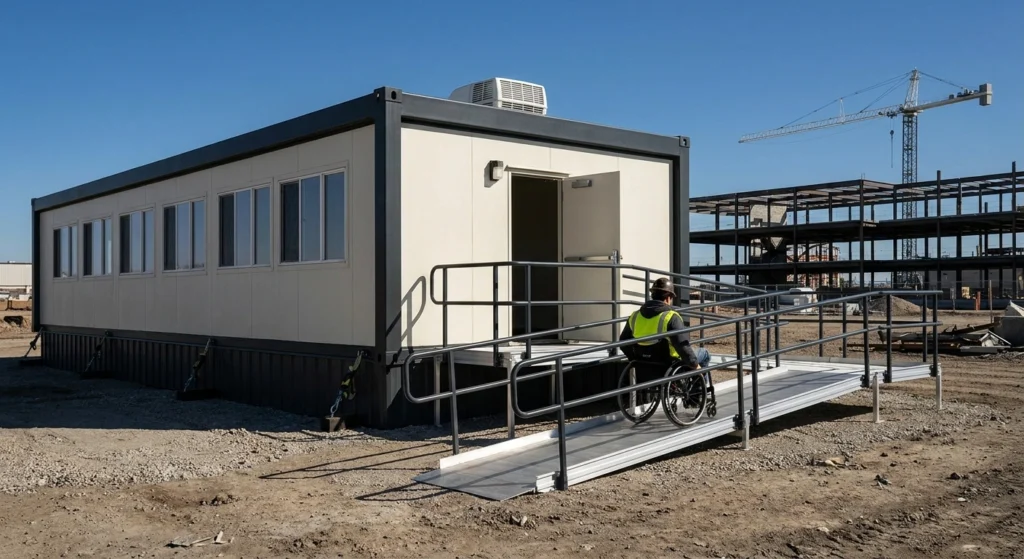
The most common sticking point is the entry. A standard office trailer sits two to four feet off the ground on a steel frame, so the steps that ship with it are not accessible on their own — the unit needs a ramp at no steeper than a 1:12 slope (one foot of run for every inch of rise) or a powered wheelchair lift. From there the door has to give at least a 32-inch clear opening, and the restroom has to hold a 60-inch turning circle so a wheelchair can rotate. The table below lists the headline requirements so you can check any quote against the same yardstick.
One caution: accessibility rules layer federal ADA Standards with state and local building and accessibility codes, and the exact numbers that apply to a temporary jobsite office can vary by jurisdiction and by how the unit is used. Treat the figures here as the widely used baseline, then confirm the specifics that apply to your site with your local jurisdiction and the current ADA Standards before you commit. Accessibility is one piece of a broader local-compliance picture — our office trailer permits by state guide breaks down how placement and transport permitting work.
| ADA requirement | Spec |
|---|---|
| Ramp slope | 1:12 maximum (1 in of rise per 12 in of run) — a gentler grade is better |
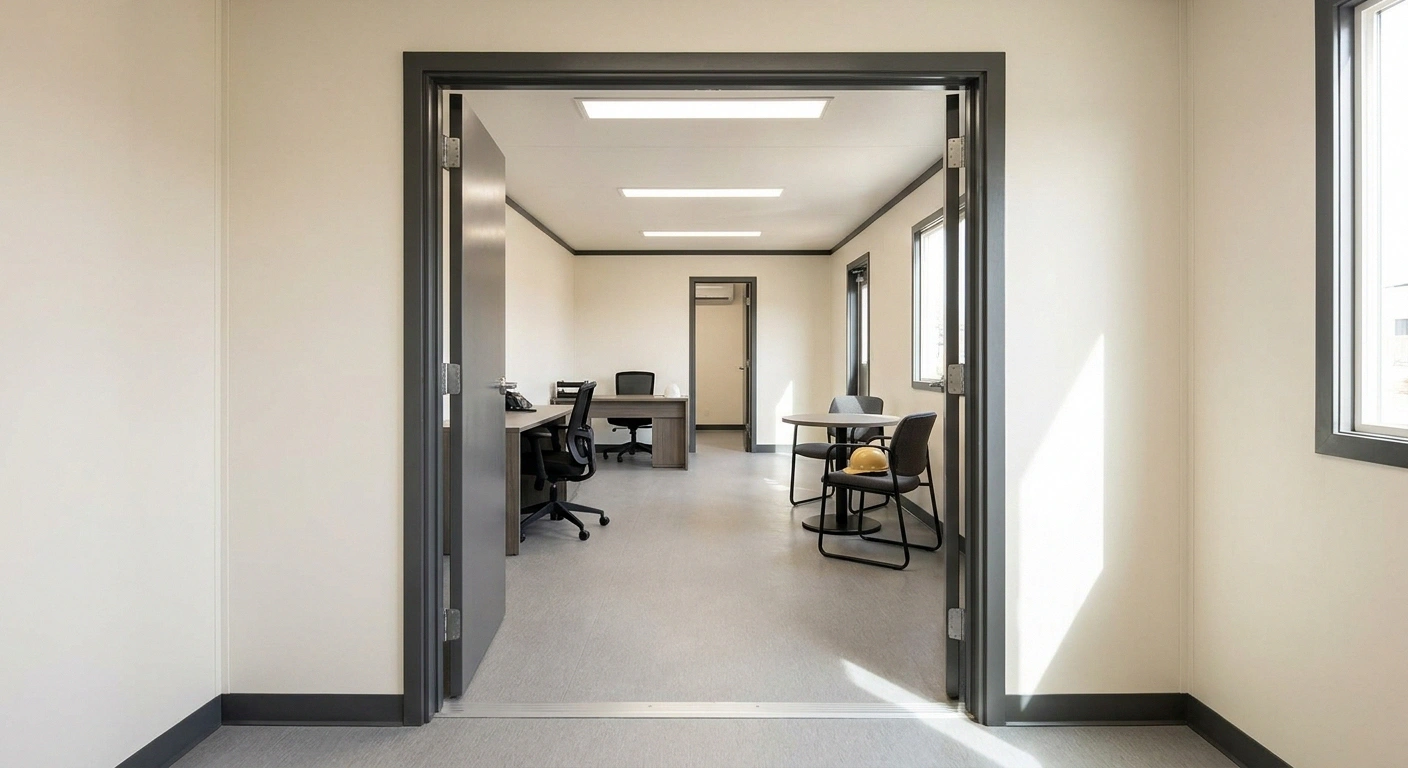
| Door clear width | 32 in minimum clear opening at the entry and at interior accessible doorways |
| Restroom turning radius | 60 in diameter clear turning circle so a wheelchair can rotate |
| Entry threshold | Level, low-profile — no abrupt step up at the doorway |
| Accessible entry | ADA ramp at 1:12 max, or a powered wheelchair lift in tight footprints |

Entry Options
ADA Ramp & Entry Options
There is more than one way to make the entry accessible, and which one fits depends on how high the unit sits and how much room you have around it. The straightforward option is a switchback ramp: a run of ramp at the 1:12 maximum slope with level landings where it turns, handrails on both sides, and edge protection so a wheel cannot run off the side. A trailer set two feet off the ground needs roughly 24 feet of ramp run to stay at 1:12, which is why the landing pattern usually folds back on itself rather than running straight out into the yard.
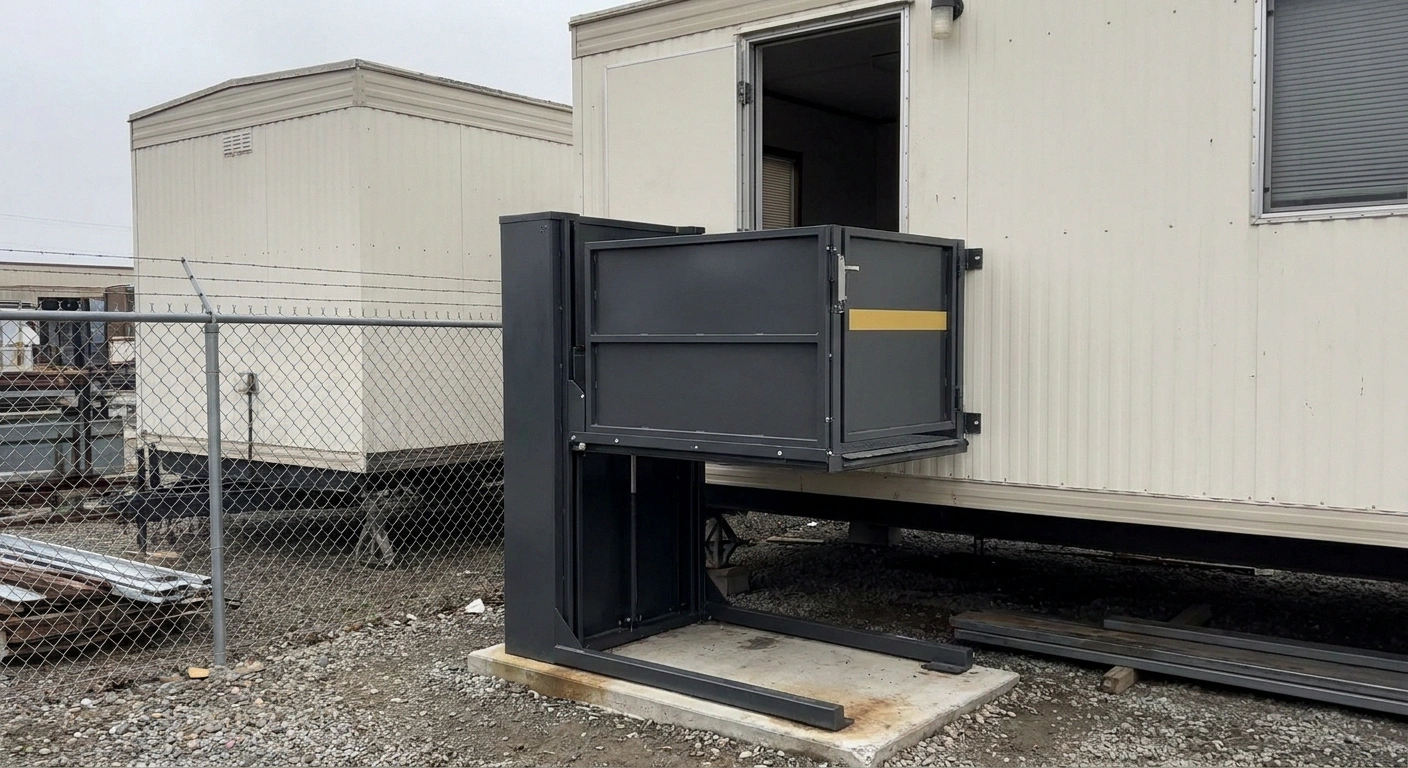
When the footprint around the door is too tight for that much ramp — a narrow pad, a unit set close to a fence or another trailer — a powered wheelchair lift is the alternative. A lift raises a platform straight up the two to four feet from grade to the door, so it needs only a small pad at the base instead of a long ramp run. Lifts add a powered component to maintain and inspect, but they solve the entry on sites where a compliant ramp simply will not fit.
Either way, the entry is something the supplier configures and delivers with the unit, so it belongs in your quote request rather than as an afterthought on site. When you ask for quotes, state the rise from grade to the door and whether you want a ramp or a lift, and confirm whether handrails, landings, and edge protection are included — the same way you would confirm any other line item. You can compare entry approaches across office trailer dimensions to see which widths leave the most room for a ramp.
Restroom Layout
ADA Restroom Configurations
The restroom is where most of the interior accessibility work happens, because turning a wheelchair takes far more clear floor than rolling in a straight line. An accessible restroom in an office trailer is built around a 60-inch turning circle — clear floor with nothing in it — so a wheelchair can rotate to reach the toilet, the sink, and the door. Grab bars run along the wall beside and behind the toilet, the sink mounts with open knee space underneath instead of a closed vanity, and the door swings or slides so it does not eat into the turning space.
That clear circle is also why ADA restrooms fit more comfortably in the wider units. An 8-foot-wide trailer is barely wider than the 60-inch circle itself once you account for wall framing, so the accessible restroom crowds out usable office floor. Step up to a 10-foot or 12-foot width and the same restroom leaves far more room for desks and a meeting area beside it — which is why ADA-ready layouts most often land in sizes like the 10×50, the 12×50, or the 12×60.
Suppliers configure the restroom as part of the build, so the layout, the fixtures, and the grab-bar placement are quote-time decisions rather than something you retrofit later. The exact fixture heights and clearances are set by the current ADA Standards and your local plumbing and accessibility code, so name “ADA-compliant restroom” in the request and let competing suppliers confirm how they meet it — then compare the configurations they propose side by side.

Quote Anatomy
Getting ADA Units Into Your Quote
Getting an ADA-compliant unit comes down to asking for it the right way, because accessibility is a set of configuration choices the supplier builds in, not a separate product line. The single most useful thing you can do is name “ADA-compliant” in the quote request and spell out the parts: an accessible entry (ramp at 1:12 or a lift), a 32-inch clear door, and an accessible restroom with the 60-inch turning circle. That way every supplier prices the same scope and you are comparing like for like instead of guessing what each bid includes.
Width is the other lever, since the accessible restroom and the interior turning clearances fit far more easily in a 10-foot or 12-foot body than an 8-wide. If you have not settled on a size, it is worth requesting a wider unit — a 10×60 or a 12×60 — so the ADA layout does not crowd out the office space you need. The same accessibility scope applies whether you rent or buy, so you can weigh office trailer rentals against office trailers for sale once the configuration is set, and the used construction trailer market carries accessible-configured units as well.
One form puts your ADA requirements in front of up to 5 reputable suppliers serving your market at once. State the rise to the door, the width you want, the restroom and door requirements, your delivery ZIP, and whether it is a rental or a purchase, and the suppliers come back with competing quotes — typically within about an hour during business days. You compare the configurations and the numbers, and you decide. It is free and there is no obligation; the suppliers pay us when they win your business.
Common Questions
FAQ — ADA-Compliant Office Trailers
What makes an office trailer ADA-compliant?
An office trailer is ADA-compliant when a person using a wheelchair can enter, move through, and use the restroom independently. That comes down to an accessible entry instead of stairs, a wide enough door, and enough clear floor space inside to turn around. The headline targets, drawn from the ADA Standards for Accessible Design, are an entry ramp at a 1:12 maximum slope or a powered lift, a 32-inch minimum clear door opening, and a 60-inch turning circle in the restroom. Because federal ADA rules layer with state and local codes, confirm the exact figures that apply to your jobsite with your local jurisdiction and the current ADA Standards.
What is the maximum ramp slope for an ADA office trailer?
The ADA Standards set a maximum running slope of 1:12 for a ramp, which means one foot of ramp run for every inch of rise, and a gentler grade is better where there is room for it. Because a construction office trailer sits roughly two to four feet off the ground, the ramp run gets long quickly: a two-foot rise needs about 24 feet of ramp at 1:12, which is why ramps usually switch back with level landings rather than running straight out. Where a pad is too tight for that much ramp, a powered wheelchair lift is the accessible alternative. Confirm the rise from grade to your door so the supplier can size the ramp or lift correctly.
How wide does an ADA door need to be on an office trailer?
An accessible door needs to provide at least a 32-inch clear opening, measured with the door open, at both the entry and any interior accessible doorways. The clear width is what a wheelchair actually passes through, so it is measured to the face of the open door and the stop, not the nominal frame size. Along with the width, the entry threshold should be level and low-profile so there is no abrupt step up at the doorway. Name a 32-inch clear door in your quote request so every supplier configures the unit the same way and you can compare bids on equal footing.
What size office trailer fits an ADA restroom best?
An accessible restroom is built around a 60-inch clear turning circle, which is nearly the full interior width of an 8-foot trailer once wall framing is accounted for, so it crowds out office floor in the narrow widths. The 10-foot and 12-foot widths fit the same restroom far more comfortably and still leave room for desks and a meeting area, which is why ADA-ready layouts most often land in sizes like the 10×50, 12×50, or 12×60. If you have not settled on a size, request a wider unit so the accessible restroom and the interior turning clearances do not eat into the workspace you need.
Can I rent an ADA-compliant office trailer or only buy one?
Accessibility is a configuration, not a separate product line, so it applies whether you rent or buy. Suppliers build the accessible entry, the wide door, and the accessible restroom into the unit, and you can request that scope on a rental or a purchase alike. For a short, one-off job a rental usually makes sense, since the supplier handles delivery and pickup of the unit and its ramp or lift; recurring use across projects can favor a purchase, and the used market carries accessible-configured units too. Set the ADA scope first, then weigh rent against buy against the same configuration.
How does this quote-comparison service work?
You submit one form with your project type, the size you need, your ADA requirements, rent or buy, delivery ZIP, project duration, and contact email. We send the request to up to 5 reputable office trailer suppliers serving your market. They submit competing quotes, typically within an hour during business days. You compare the configurations and decide. It is free, with no obligation. We are paid by suppliers when they win your business — you pay nothing.
Compare ADA-Compliant Office Trailers With Up To 5 Competing Quotes
One form, your ADA requirements in front of up to 5 reputable suppliers serving your market. Name the entry, the door, and the restroom, and competing quotes come back in about an hour during business days. Free, no obligation. No pushy sales calls.